
Lughnasadh
Honoring the skills we've sharpened and the abundance they've grown.
Something shifted in me a few years back. I suddenly had a pull to understand where I actually come from. I've traced my family tree as far back as the 1500s, stood at gravesites of ancestors I never met, and even crossed the Atlantic to get married in the country my maternal line called home. None of that was planned as some big spiritual project, but it just kept unfolding, one thread pulling the next.
What I didn't expect was how much the old Celtic celebrations would feel like recognition rather than discovery. Ireland and the UK are the strongest lines of my lineage, and the more I've learned about the rhythms they lived by, the more it felt less like learning something new and more like remembering something I already knew.
For many, not all, our world has moved away from being so connected to the seasonal transitions of the year and the agricultural way of life. But there’s a resurgence of interest in connecting with “the old ways” and traditions of the past. Not in some overly romanticized way (although that’s out there) but in a way that feels like it gives a sense of belonging, understanding, and identity to who we are.
Lughnasadh wasn’t on my radar before, and it’s still not one of the more prominent sabbats that I celebrate, but it’s a moment that I’ve come to appreciate more and more. The beginning of August is when the garden looks most abundant – with showy blooms and lush foliage and stems so high some of them compete with my own height. It’s a time when you sit down for a second and think “wow, this all grew from my hard work, my skill and my joy of growing”.
Yet it’s also a time when the land starts the slow, gradual shift towards autumn.
And Lughnasadh helps us recognize both.

A bouquet of wheat one of my neighbors left on the stand for me my first season.
What is Lughnasadh?
Lughnasadh marks the midpoint between the Summer Solstice and the Autumn Equinox, and it's the first of the year's three harvest festivals. Falling on August 1st (with many communities honoring the days around it too), it historically lined up with the wheat harvest – a moment when agricultural communities gathered to celebrate what the land had given them and to feel some real reassurance that there would be food through the winter ahead.
It's a festival built on relief as much as celebration. The work of the growing season is starting to pay off, and there's a sense of reassurance that comes from knowing your hard work and efforts haven’t been for nothing (and back in the day, that your family would survive).
Is it Lughnasadh or Lammas?
You'll often hear this sabbat called Lammas, and it's worth knowing the two names come from very different places.
Lammas comes from "loaf mass" which is tied to the Christian tradition of baking bread from the first grain harvest and having it blessed at church. Lughnasadh, on the other hand, is the older, Celtic name, tied not to bread but to a god.
Both names point to the same season and the same instinct to mark the harvest, and both share the same themes overall… just through different lenses. I tend to use Lughnasadh, since it's the thread that ties back to my own ancestry, but you'll see both used pretty interchangeably depending on the tradition someone's drawing from.
Lughnasadh in the Sky
Lughnasadh falls in Leo season, and honestly, the overlap is noticeable when you start looking at them both. This is peak summer when the sun is at its strongest, the days still feel long, and there's a kind of vitality in the air that matches Leo's whole personality. Leo is ruled by the sun itself, and this is the sun's season to show off a little before the light starts to slowly wane and the season shifts to fall.
Leo is also about performance, pride, and personal expression and helps us see what we’re made of, what we’re capable of and what we’ve grown into. It’s our inner cheerleader that’s rooting for us because it knows we were born to shine. That maps directly onto what this sabbat has always been about: taking stock of the skills and effort you've put in and letting yourself actually be seen for it (not always easy), rather than quietly moving on to the next thing. It's a season for confidence that's earned… the kind that comes from having actually done the work.
Lughnasadh in Story & Symbol
Lughnasadh takes its name from Lugh, a Celtic god associated with light, skill, and mastery of craft. He wasn't a farming deity in the way you might expect from a harvest festival, but he was known for being good at everything. He was a jack-of-all-trades god who excelled in more disciplines than any single deity should reasonably be able to claim.
The festival held in his honor centered on games, competitions, and displays of talent… almost like a community showcase. People gathered to test their skills against each other and to be recognized for what they were good at. It's a bit of a different energy than some of the other sabbats. This one has always had a bit of showmanship built in, which tracks perfectly with the Leo season it falls under.
Symbols & Seasonal Traditions
A few things show up again and again in how this season has been marked, historically and now:
Grain and bread. Wheat, barley, and other early harvest grains are the most direct symbol of the season, and fresh-baked bread is the classic way to honor them.
The color gold. Between the ripening fields and the sun at its peak, gold shows up everywhere… in decor, in candles, in the way the sunlight looks this time of year.
Sunflowers. They're blooming right now and they track the sun the same way this whole season does, making them a natural stand-in symbol.
Corn dollies and woven wheat. An old tradition of weaving the last stalks of grain into small figures, believed to hold the spirit of the harvest until it could be planted again the following year.
Games and gatherings. True to Lugh's legacy, community competitions, fairs, and shared meals have long been part of how this sabbat gets marked.
Simple Ways to Celebrate
You don't need a field of wheat to acknowledge what this season is offering. A few ways to bring it into an ordinary week:
Bake something. Bread is the obvious choice, but any homemade baked good works. As you make it, let yourself actually feel some gratitude for having enough (because that's the whole point). And… if buying a nice loaf of bread is easier for you, go for it.
Build a small altar or seasonal corner. Wheat, sunflowers, gold candles, construction paper sun cutouts, or whatever's ripe at your local farmers market. It doesn't need to be elaborate… have some fun with it (Leo wants you to).
Take stock of a skill. Finish a project you've been sitting on, or spend an afternoon on a craft purely because you're good at it. Let Leo season's confidence show up here.
Gather people. A backyard dinner, a bonfire, a potluck or anything else that brings people together to share what the season has given everyone.
Write it down. A short gratitude list, or a few lines on what you've actually accomplished this year so far. Not a to-do list or a “didn’t get done” list… a done list.
Wear some gold. Our clothes, jewlery and accessories can be an easy way to embrace the colors of the celebration. Add a little gold to your outfit, throw on gold jewelry if you have some, even a gold ribbon around your wrist as a make-shift bracelet or tied around your bag for the day can be a little reminder of the day.
Embracing the Season
Lughnasadh asks something pretty simple: pause, and notice what's already come in. Not what's still ahead, not what's left to do… what's already here, ready to be gathered and appreciated. There's a real difference in how July and August feel once you start paying attention to that shift.
For me, this sabbat has become less about ancient wheat fields and more about permission… permission to feel proud of what I've built, to enjoy the abundance without immediately reaching for the next thing, and to let the sun have its moment before the year starts to turn again. However you mark it, I hope this season finds you with something worth harvesting.
Happy Lughnasadh to you!
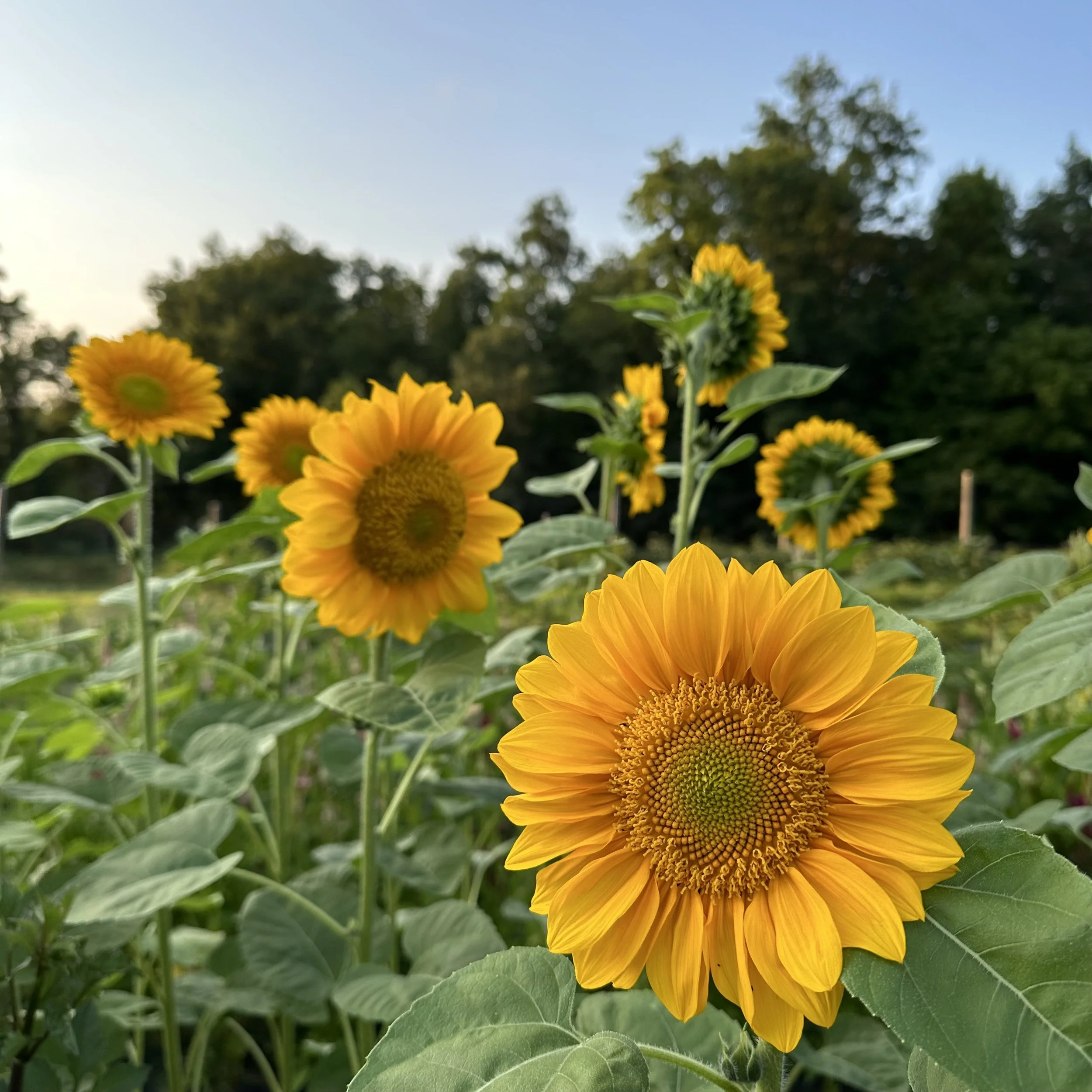
The sunflower… the epitome of a sun symbol in the garden during later summer.