
Flowers that brighten your home year-round.
What started as a simple practice in resourcefulness has quickly become one of my favorite reasons for growing flowers: drying them. The trend of dried or “everlasting” flowers has made a strong comeback in recent years, thanks to the resurgence of bohemian style in design and I, for one, am here for it. Don’t get me wrong, fresh-cut flowers are wonderful as they brighten any room and lift spirits instantly. But there’s something truly special about a bouquet that lasts even longer and that’s where dried flowers come in.
Let me share a quick story…
My wedding bouquet was nothing short of breathtaking (I’m biased but still). We worked with a local flower farmer who had free reign to choose whatever she felt fit the mood… and wow, did she exceed my expectations. The flowers took my breath away, left me in tears, and were more beautiful than I could have imagined. Which is why, when it came time to part with them, I had a bit of an emotional moment.
You see, we were lucky enough to have a small destination wedding in Northern Ireland. So when our special day ended, we were leaving everything behind. I wasn’t quite ready to let my bouquet go… and I didn’t.
I knew I wanted to bring it home with me, so I hung it in our rental car for two weeks while we traveled around, taking it in and out of hotel rooms to hang and dry. As we prepared for our flight home, I found a cheap suitcase in a department store, wrapped the bouquet loosely in gauze table runners from the wedding and carefully packed it in. It was the most meaningful souvenir to make the trip back across the Atlantic… and it made it!
I share that story because, if I could dry my wedding bouquet while traveling across Ireland and flying home across the Atlantic, I’m confident you can grow and dry flowers for yourself.
So, if you’re dreaming of capturing the essence of summer or adding a touch of natural charm to your home year-round, here are some of my favorite flowers to grow and dry, along with some general suggestions to get you started in the process.
Easy Annual Flowers for Drying
These are some of the tried-and-true annuals I grow every year with the primary intention of being able to dry them. I’m always adding new varieties to try, but these ones are easy to grow, hold their color, and end up being versatile in a number of ways for dried flower work. I’m showing a sample photo under each, but once you start researching seeds you’ll find there are lots of varieties for each flower type. Have some fun with it and try a few!
1. Statice
Statice is a classic for a reason and it’s possibly what you think of first when you think of dried flowers. These papery flowers hold their color beautifully and have a naturally dry texture, making them one of the simplest to preserve. They thrive in well-drained soil and sunny spots, and offer a variety of vibrant hues from purple to yellow. Snip them when the blooms are fully open, and hang them upside down to dry. My favorite statice is called “Pink Pokers” (I get mine from Johnny’s Seeds). They look like a plant right out of a Dr. Seuss book and add some wonderful movement/texture to dried flowers.

Statice (Seeker Blue) Photo ©Arlyn Flower Farm
2. Strawflower
Strawflowers are as charming as they are durable. Their blooms feel almost like they’re made of paper (similar to statice), and they retain their bright colors exceptionally well. These flowers love full sun, are easy to grow from seed and you can find them in vintage whites, romantic apricots, vibrants fuchias and even dark moody burgundy colors. Honestly, you could plant only strawflowers and have an incredible variety. Harvest them just before the blooms fully open, as they’ll continue to unfurl slightly during the drying process.
One thing to note with these flowers: Once dried, the stems become quite brittle and the flower heads easily pop off if you’re fussing with them too much. If you want to have a more pliable stem — especially for things like flower crowns, wreaths, etc. — most people will secure the flower head to floral wire to secure the flower head. I’ve hung strawflower in my house without wire and they stay just fine, but they’re not moving around at all. For other projects, I’ll use wire and/or hot glue (or sometimes, both!).
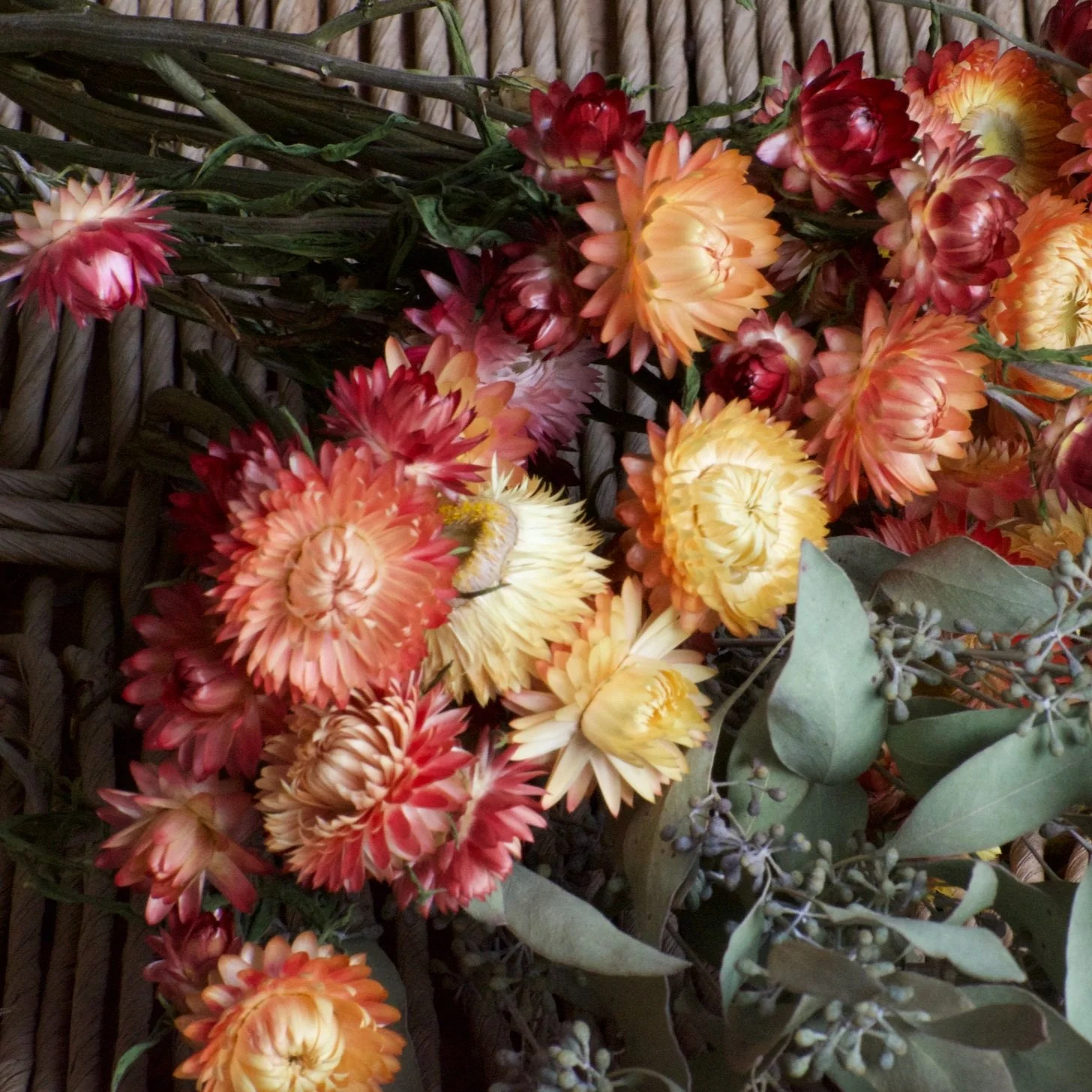
Strawflower (Apricot) Photo ©Arlyn Flower Farm
3. Celosia
These are probably one of my favorite flowers to grow because of their versatility, texture, color… and they self-seed which means they are a wonderful option for beginner growers. With its feathery plumes or cockscomb-like shapes, celosia adds texture and a bold pop of color to dried arrangements. They’re heat-loving plants that thrive in sunny gardens and are “cut and come again” which means the more you harvest the more stems you’ll have. Harvest when the blooms are at their peak and before you start seeing small black seeds emerge, then hang them in a dry, dark space to preserve their vibrancy.

Celosia (Texas Plume) Photo ©Arlyn Flower Farm
4. Globe Amaranth (Gomphrena)
If you’re looking for low-maintenance and high-impact, globe amaranth is your flower. These little pom-poms of color (or gum drops as I like to think of them)—ranging from magenta to white—are wonderfully cheerful in both fresh and dried arrangements. Cut them when the flowers are fully open, and dry them as you would other blooms.
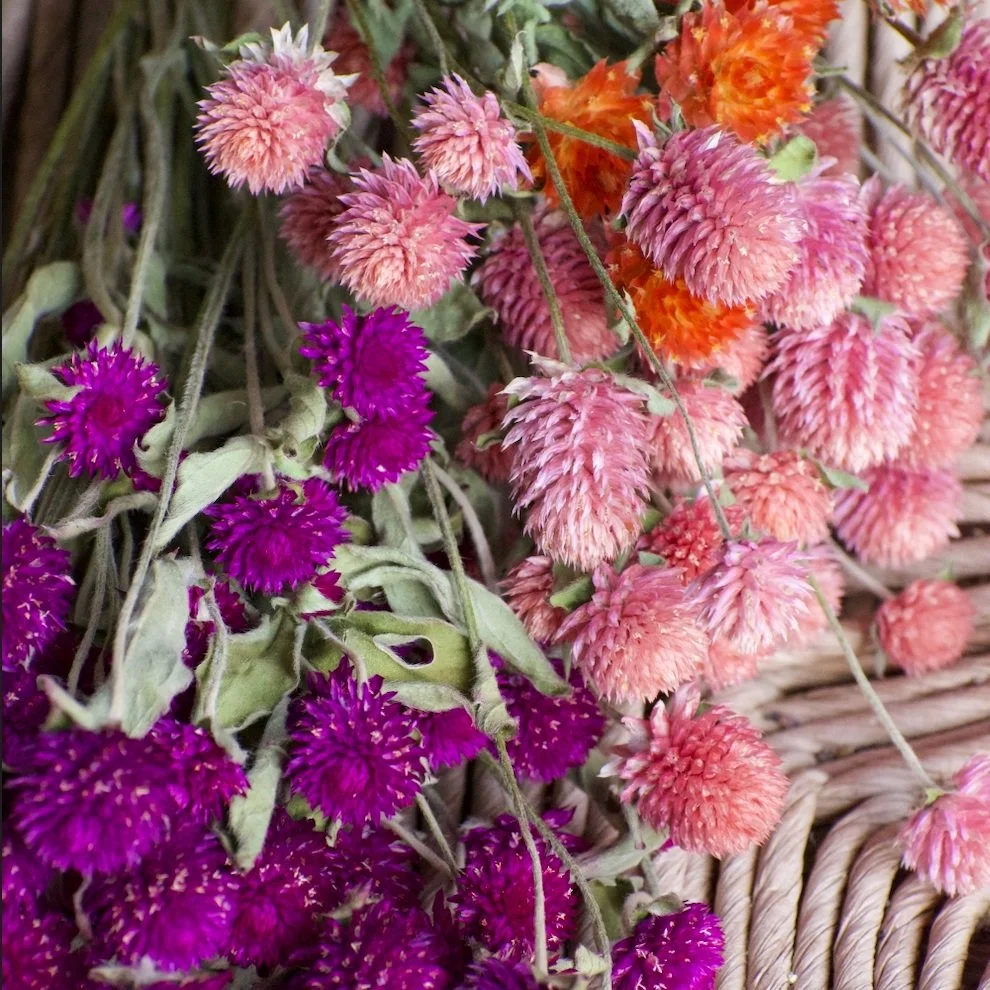
Globe Amaranth (various colors) Photo ©Arlyn Flower Farm
A Note on Perennials
While annuals like statice and celosia are often wonderful for dried bouquets, perennials and native plants can also offer stunning options. Flowers such as yarrow, feverfew, and even peonies are a few favorites of mine if you have some permanent space available in your garden. I also like to think about perennials that can offer interest, even if they don’t make a great flower for drying, such as echinacea. Once the petals turn I’ll cut some of the stems and dry the seed head for some unique texture and visual interest.
Other Flowers to Dry
Now, I’ve listed a few of my most favorites to dry but in all honesty, the list of flowers you can dry is never-ending. I’ve dried lavender, marigolds, dahlias, zinnias, amaranth, anise hyssop and chamomile just to name a few, in addition to herbs like mountain mint, sweet annie and wild marjoram. I encourage you to experiment! You’ll find out quickly if something will hold up or not.
Tips for Drying Flowers
Drying flowers is as much an art as it is a science. Here are a few tips to help you preserve your blooms:
Timing is everything: Harvest flowers at their peak for the best results. For some blooms, like strawflowers, harvesting just before they’re fully open works best.
Dry upside down: Hang small bunches of flowers upside down in a cool, dark, and dry space (I hang all of mine in my garage). This helps maintain their shape and color.
Avoid direct sunlight: While drying, keep flowers out of direct sunlight to prevent fading.
Decorating with Dried Flowers
Once your flowers are dried, the possibilities of what you do with them are quite endless. Create wreaths, add them to gift wrap, use them in crafts, arrange them in a favorite vase, or simply hang them somewhere in your house. Get creative! I’ve used dried flowers to adorn homemade candles, I’ve added them to bath soaks and I've even created a focal wall of them in my kitchen because I didn’t want to install wallpaper. My latest project was a dried flower book that I shared over on my Substack before I gave it to my favorite local bookstore. Dried flowers bring a wonderfully romantic and natural touch to things and they’re such a satisfying way to extend the magic of your garden each season.
So why not plan for a few of these additions in your garden? Give it a go! You might just find yourself cherishing these flowers long after summer has faded.

My drying set-up in the garage Photo ©Arlyn Flower Farm