
How to Grow a Moon Garden
The basics, the beauty and the magic behind it.
When it comes to a moon garden, many people might think of it as a practical thing, with white flowers that glow in low light. night-blooming plants that make an evening garden usable and a space designed to be beautiful after dark.
And it can definitely be all of that. But for me (and perhaps others) there's another layer to it… and a deeper desire for having one. A reason that has less to do with aesthetics of it and more to do with the magic it holds and relationship between gardens and the sky.
People have been gardening by the moon for as long as people have been gardening. Planting by the lunar cycle isn't mysticism for its own sake — it's an observation, passed down across generations, that the moon's phases affect moisture in the soil, the movement of water through plant tissue, and the energy available for different kinds of growth. Whether you approach it practically or ceremonially or both, working with the moon in your garden changes the quality of your attention. And that alone is worth something.
A moon garden, at its fullest, isn't just a garden that looks beautiful by moonlight. It's a garden grown in relationship with the lunar cycle and one that reflects the moon's rhythms outward and invites you to notice your own rhythms in return. It’s a garden that calls to you when the full moon rises and when the new moon hides in the shadows of the sky. It’s a garden that, especially for women, connects us to something more innate in our knowing than we might even be aware of… at first.
So let’s talk through all of it… the basics, the beauty and the magical possibilities behind it.
The Colors of the Moon Garden
In a moon garden you're reaching for colors that come alive when the light changes. A white peony that glows on a stormy and cloudy afternoon or a silver artemisia that seems to generate its own light at dusk.
Colors that tend to be popular choices: whites, silvers, pale blues, and soft purples.
The colors of the moon glowing bright in the sky. Colors that reflect rather than absorb light. The palette of dusk and dawn, of things seen by moonlight rather than full sun… luminous, cool, a bit otherworldly.
These are colors for a different kind of seeing. They’re softer, slower, and more receptive instead of perhaps those that demand attention in the daylight hours. Which is part of what a moon garden is really asking of you… that softer, slower and more receptive perspective.
Plants for the Moon Garden
Moonflower - The most obvious choice, perhaps. Moonflower blooms at dusk and closes by morning, moving through a full cycle within a single day. Its large white blooms and sweet nocturnal fragrance make it the heart of any moon garden.
Lunaria - With “luna” in the name, this comes as another potential obvious flower to grow for a moon garden. This is a biennial, meaning it won’t flower the first year, but the second year will bring beautiful vibrant purple flowers on tall stems that will turn into opalescent discs (hidden beneath the outer layer of the seed pod) that mirror a full moon.
White Peonies - Luminous in low light in a way that colored peonies simply aren't. The massive flower heads in early summer seem to almost hold their own light, especially under darker skies.
Silver Artemisia - Named for Artemis, goddess of the moon, artemisia is perhaps the most intentional plant choice for a moon garden. Its silver-grey foliage reflects light beautifully and it carries lunar associations across many traditions. Artemisia Vulgaris, commonly known as Mugwort, is also one of the most magical plant associations for witchy people. But as a side note, this spreads quickly and is considered invasive in some areas. Check your location before deciding to plant this in the garden (sometimes in a container or raised bed might make more sense).
Lamb's Ear - Any plant named after a baby animal seems like a good idea to me. Soft, silver, and tactile in a way that makes you want to touch it, lamb's ear absolutely glows in low light and its velvety texture adds a sensory dimension to the moon garden beyond just the visual.
White Cosmos - One of the easiest flowers to start from seed, this delicate, luminous, and whimsical flower dances like a ghostly spirit on the wind. White cosmos moves in even the slightest breeze and catch light in a way that makes an evening garden feel absolutely alive.
Night-Scented Stock Unimpressive by day, extraordinary by night — which makes it the perfect moon garden plant. Its fragrance intensifies after dark and carries on the evening air in a way that's almost disorienting in the best sense.
Shasta Daisy - A summer staple in so many areas, these tall disc-shaped flowers claim their space in any garden. But under the light of the moon, these flowers glow on their strong sturdy stems.
White Roses - Their luminosity in low light, their layers, their fragrance… white roses belong in a moon garden not just aesthetically but energetically. Roses are a midsummer and midnight dream, carrying the moon energy of depth, emotion, and an almost reserved beauty.
These are just a selection of plants, there are plenty more. As always, it’s important to research what will grow best in your unique zone and conditions. If some of these specific plants aren’t available in your area or you don’t have the space, the easiest thing to do is opt for color. Any white flower will glow beautifully under the light of the moon.
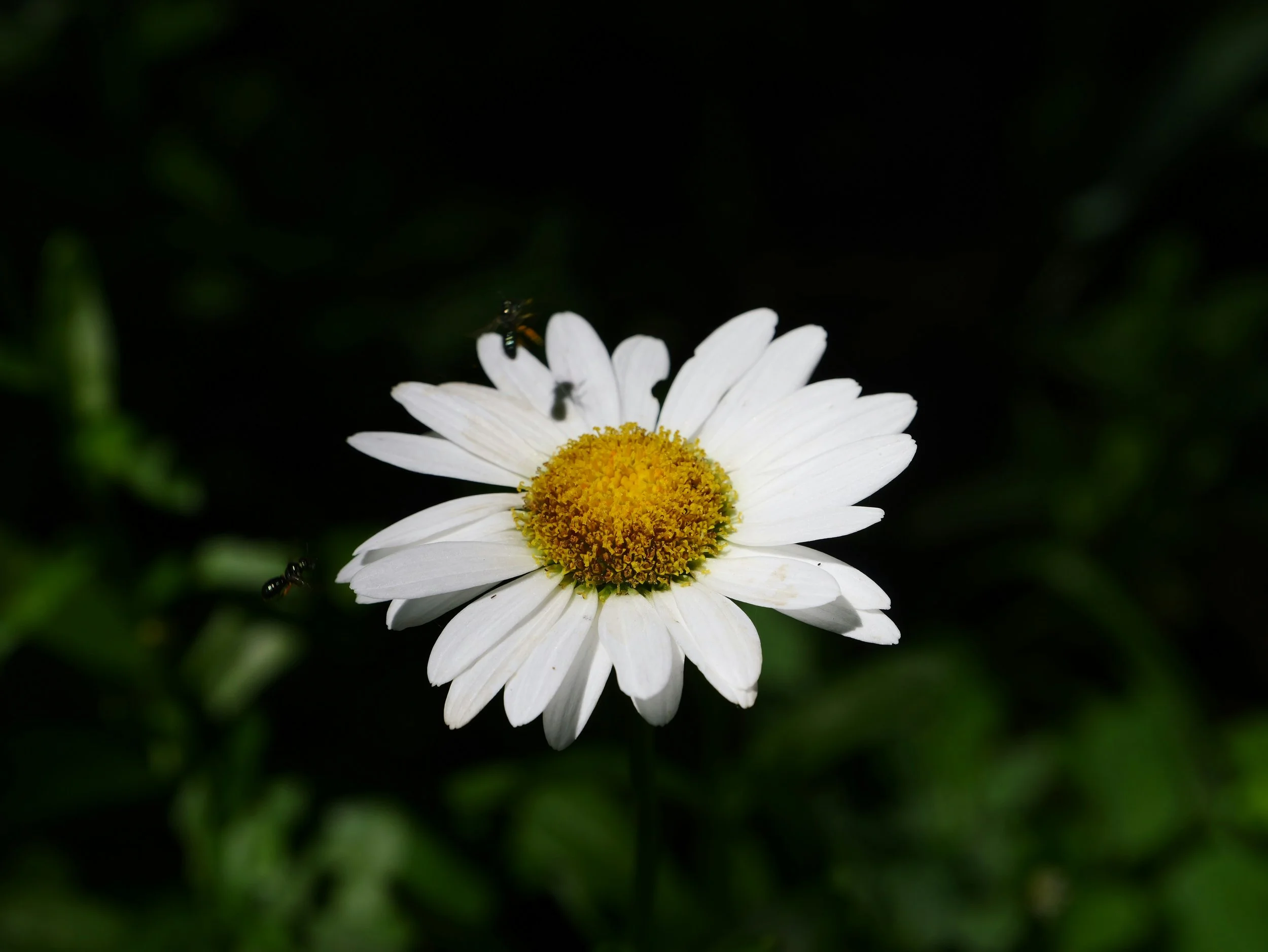
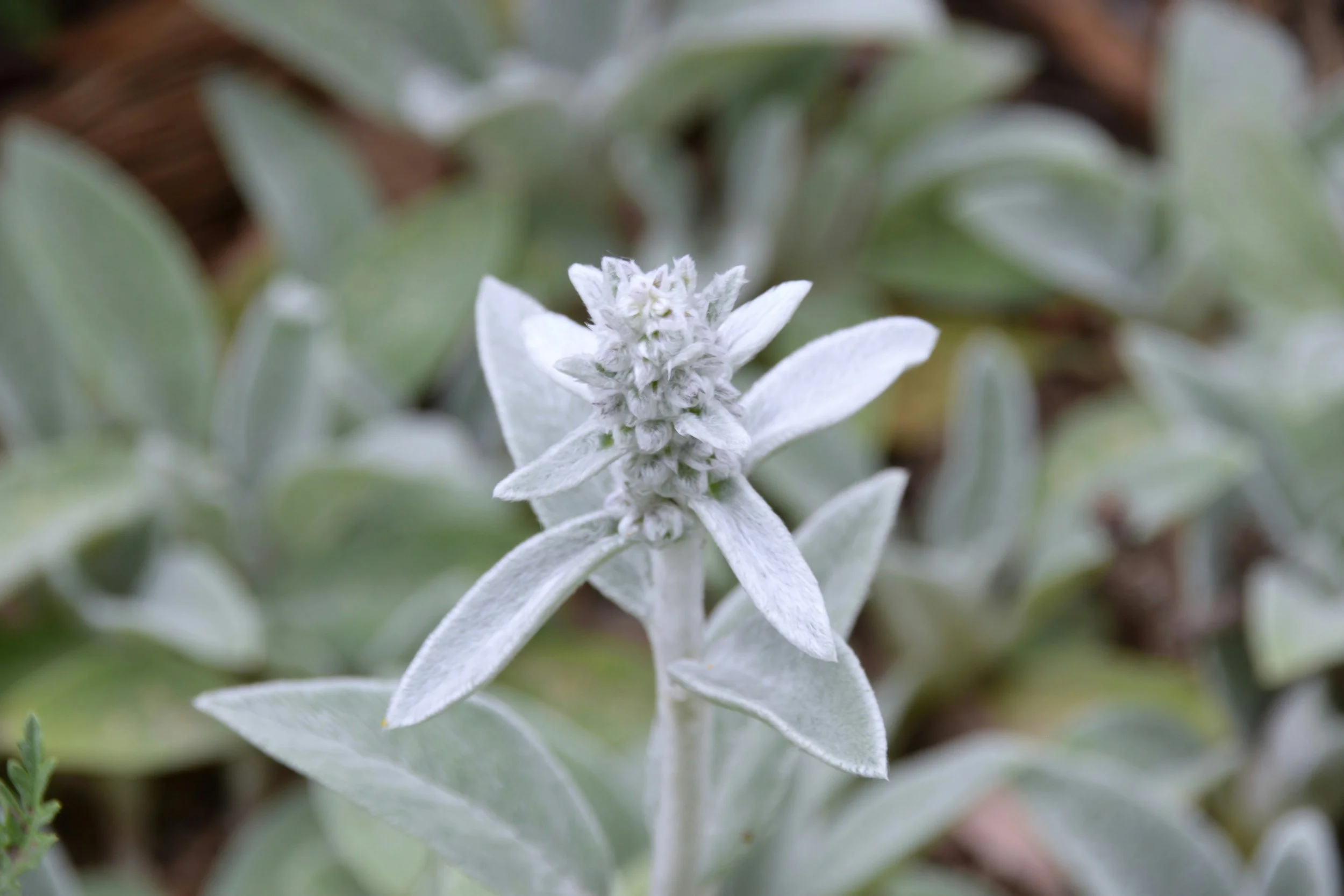
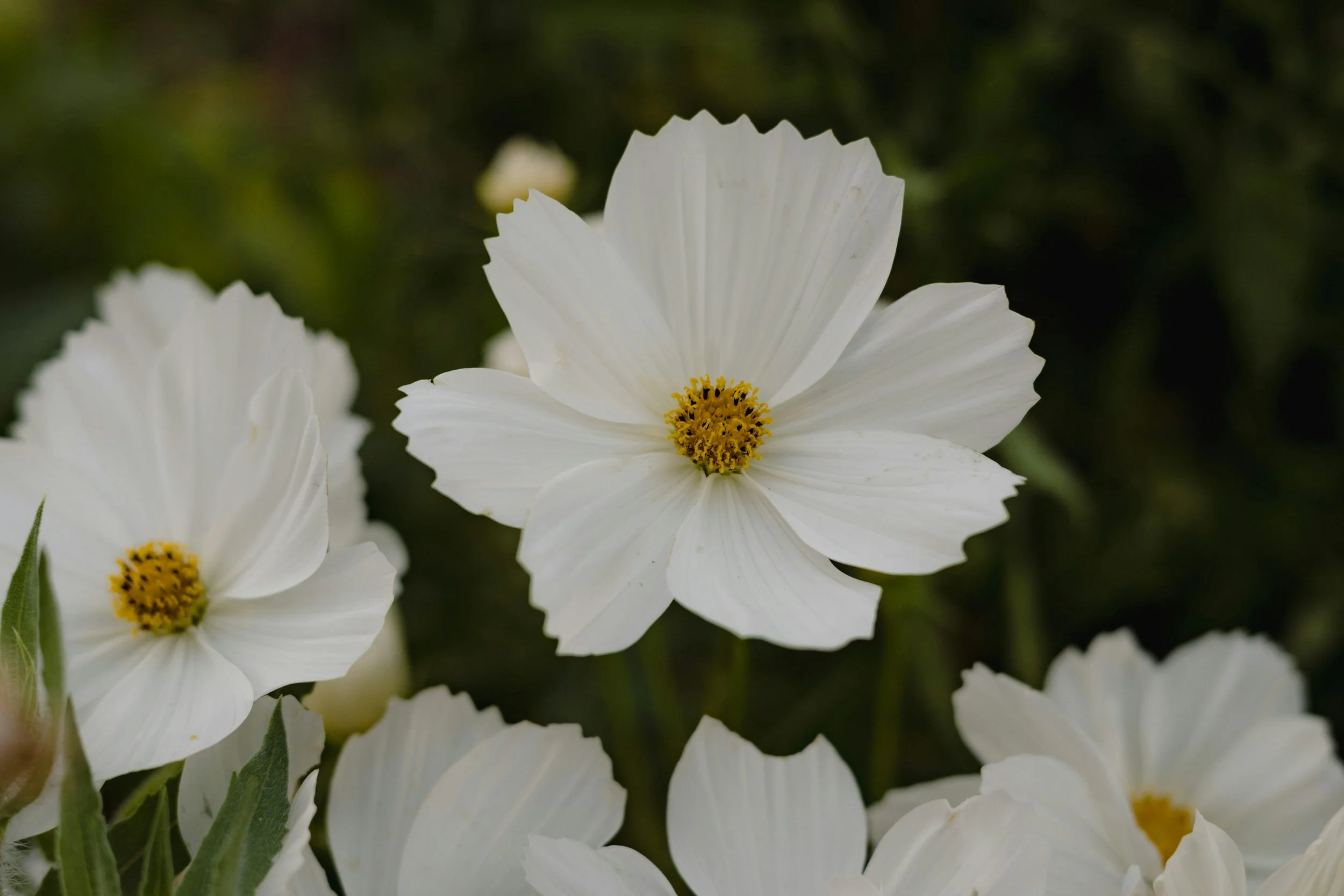
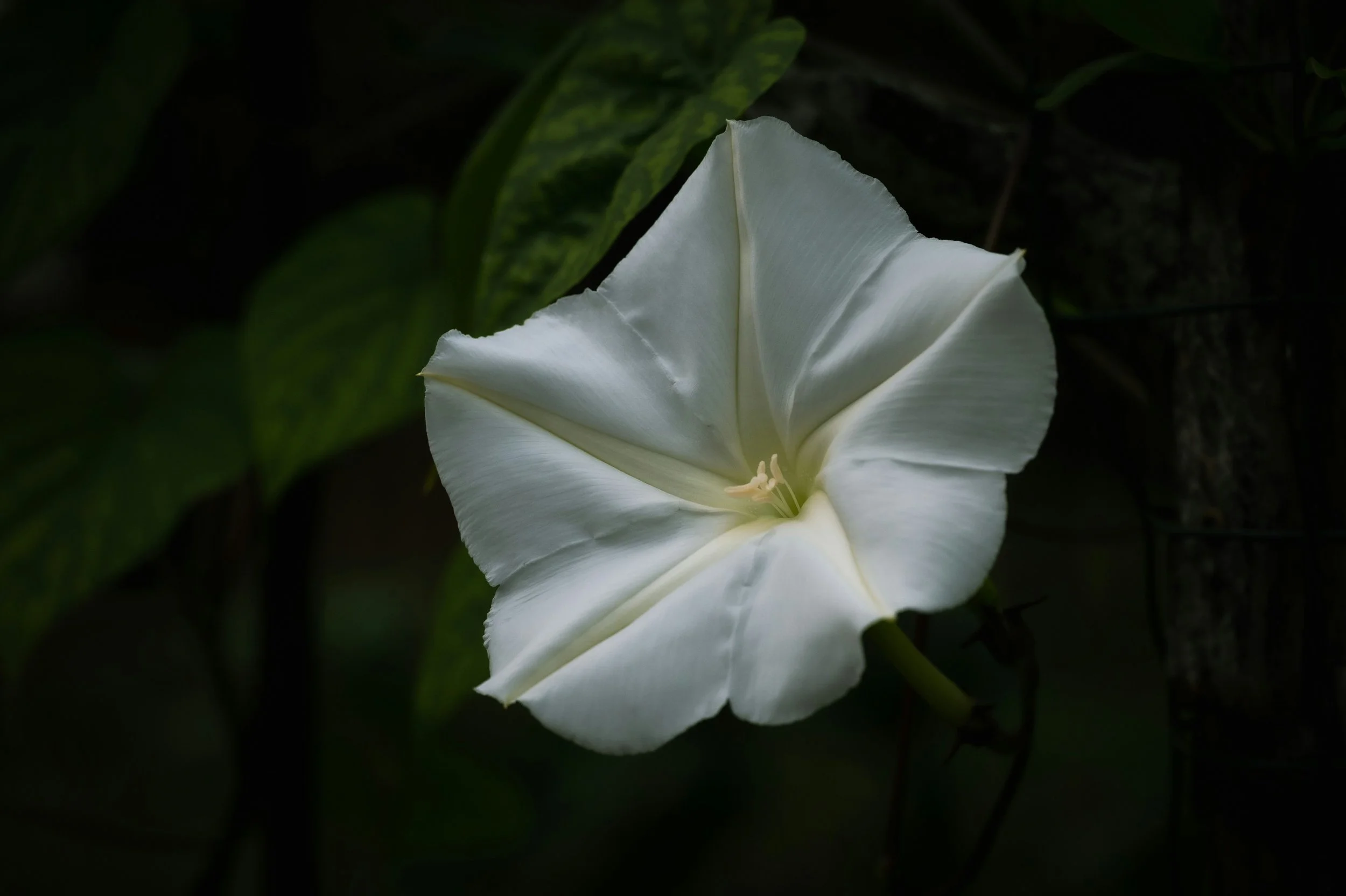
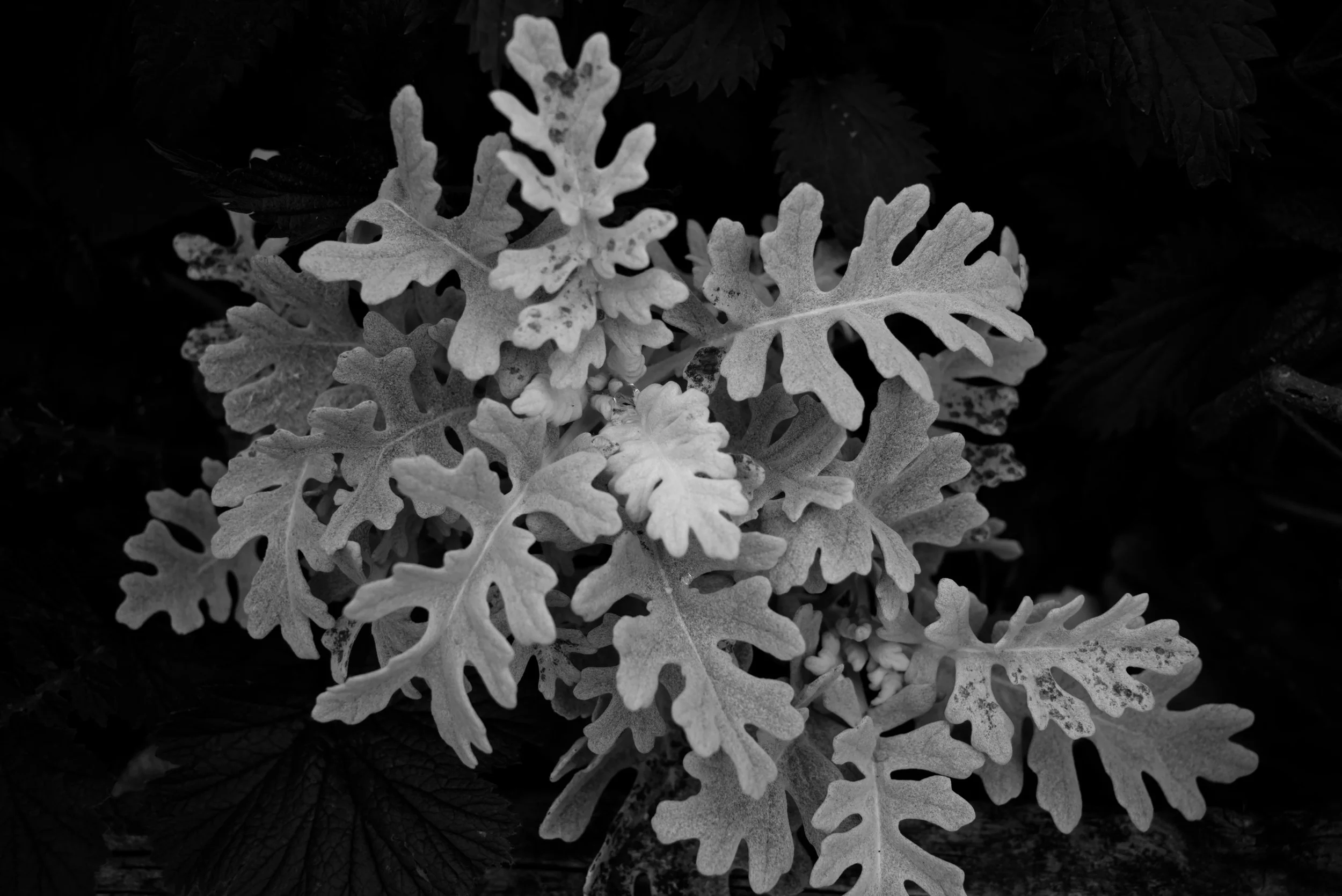
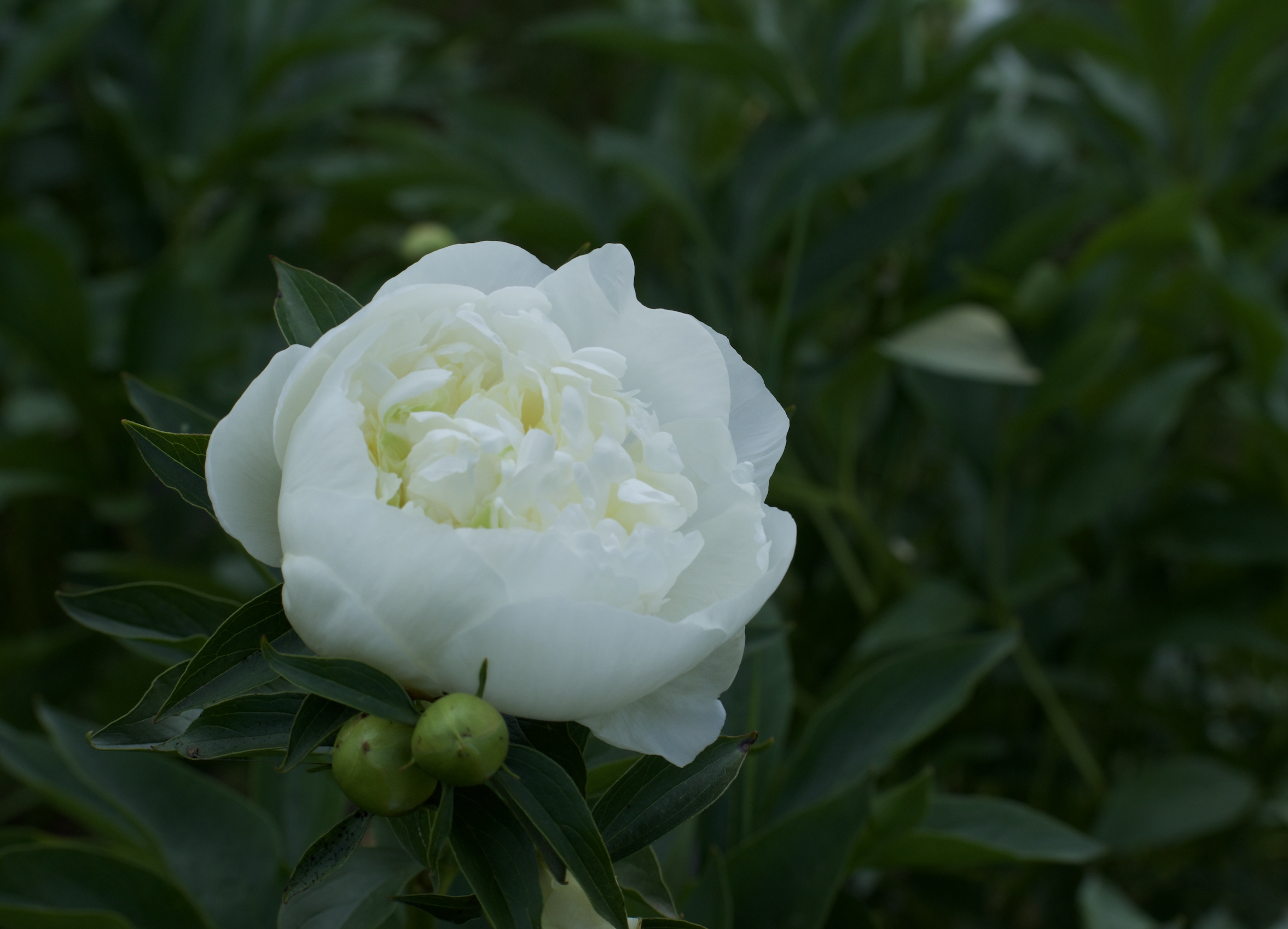
Plants pictured (top to bottom, L-R): Shasta Daisy, Lamb’s Ear, Cosmo, Moonflower, Dusty Miller (photos from Unsplash), Peony (from my garden)
Working with the Moon in Your Garden
Now that the colors and plants are chosen… let’s call them the “botanical basics” of the garden… it’s time for the deeper, wilder magic. Working with the moon is an incredibly powerful and intentional process of tuning into the rhythms and energies of the natural world. In my own practice, working with the moon was almost a “gateway” into so many other layers of spiritual work… and I think it’s gaining in popularity for good reason. Or maybe, it’s simply that so many of us are reconnecting with something that has been around since the beginning of time.
The full lunar cycle runs approximately 29.5 days from new moon to new moon, and within that cycle there are natural energetic shifts that gardeners have worked with for centuries. The basics are below, but I have other posts that go deeper into the moon phases, the new moon and the full moon specifically.
The New Moon is a time of beginnings and intentions. The soil holds more moisture in the days around the new moon and then energy starts moving upward… toward potential and towards what hasn't yet taken form. Plant seeds, start new projects in the garden, set intentions for what you want to grow… literally and figuratively… because the energy is supporting you.
The Waxing Moon phase is the two weeks between the new and full moon, and this phase supports growth and expansion. The moon is gaining light and at the same time sap rises in plants… energy is moving upward and outward during this phase. It’s a good time for planting above-ground crops, for tending what's already growing, for adding to the garden and building in the garden.
The Full Moon is the peak of the cycle… the big moment of fullness and illumination. Harvest at the full moon when possible, because plants are at their most vital. Cut flowers for arrangements, harvest herbs for drying, and pull vegetables for a nourishing meal. It’s a time to notice what has come to fruition in the garden and in your life… and then to let that gratitude be carried off on the breeze. The full moon is a time of culmination and letting go… so that we begin to make space for what’s coming next.
The Waning Moon are the two weeks between the full and new moons, and these weeks support release and consolidation. Energy moves downward, toward roots and toward what's beneath the surface. This is a good time for pruning, weeding, composting, and clearing. If the full moon was the time when you first thought of what is ready to go, the waning moon is when you actually begin the process of letting go of what no longer serves the garden.
Now, you don't have to follow this precisely. Even just noticing where the moon is in its cycle while you garden shifts something as it begins to connect you to a rhythm that's been running whether you've been paying attention or not. You can also start small… maybe it’s just paying attention to the full moon each month or the new moon. As with anything, it’s the intention behind the practice.
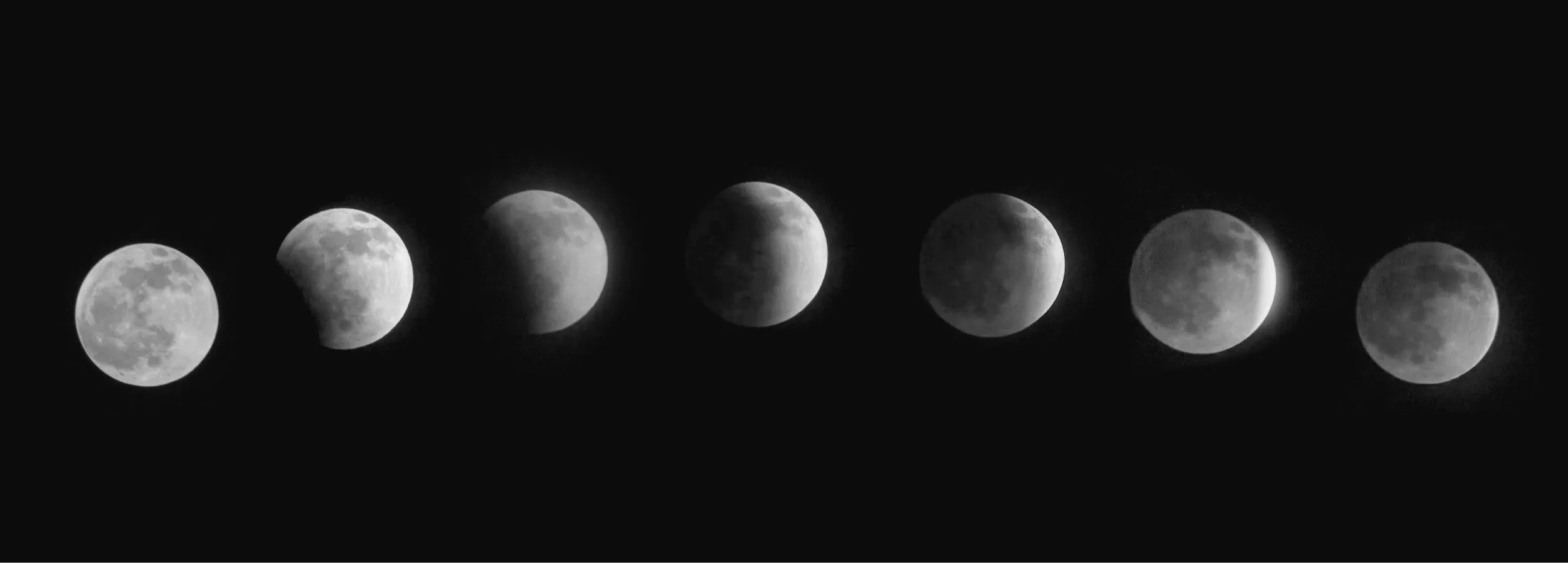
photo by Daniel Sinoca via Unsplash
What the Moon Garden Is Really For
A moon garden is about learning to see differently. It’s about slowing down long enough to notice what's happening in the low light. It’s about being in the garden at the times we usually aren't… at dusk, in the early morning, under a full moon. It’s about noticing all of the life that is there - the sounds, the sights - even in (and especially in) the darkness.
The moon moves in cycles. It grows to fullness and releases back to dark and begins again, every 29.5 days, without exception. It doesn't apologize for its dark phases and it doesn't try to stay full… it follows its own rhythm and trusts the cycle completely.
A moon garden, above all else, is a practice in building that same sort of trust in your own life. In your own cycles of fullness and rest, of expansion and withdrawal, and of visibility and quiet. The garden that looks most beautiful at night is the one that asks you to slow down, to stay a little longer, and to let the light change around you.
That's what it's really for.
So will this be the year you create a moon garden for yourself?
Ready to Grow with Intention?
If this post resonated and you want to take your garden a step further this season, Rooted in Magic is for you. This is a practical guide to growing flowers with elemental intention - including plant guides and suggestions, information to help you plant with the moon, and simple layouts to get you started.
Turn your garden into something even more magical this season.
