
A Witchy Garden in Autumn
Letting the transition be a part of the magick.
I’ve lived on my same street for a handful of years and there’s one thing that, every fall, people wonder about me and my home…
When the witches will come out.
You see, my first autumn I made six witches for my front yard that dance around a glowing fire. It was a craft of old plastic bags, black tablecloths, rotten logs and orange holiday lights that in some ways felt like I was welcoming my own little coven to my space (in place of a real one that I so desperately want to be a part of… maybe soon).
What I didn’t realize was how these little witches would mesmerize others, too. Adults neighbors who look forward to them every year, children on the street who ride their bikes over to watch the “fire” glow, and they’ve become a staple on every FaceTime with my family overseas.
Every year I add something to the space, especially now that it’s a full garden and now just a lawn (like it was the first few years)... a grapevine arch hanging over the doorway with spiders (fake ones… although there’s probably real ones, too, if I look close enough), pumpkins placed here and there around the decaying flowers, and of course… gravestones to tell the tale of the season. In every sense of the word it’s become a true witch’s garden in fall.
But what makes it so… without the extra decoration… is that it honors the transition of the season. Because autumn on its own carries all of the seasonal aesthetic and magic it needs, especially if we’re intentional about looking at it that way.
This post is all about honoring the transition of the garden from summer to fall to winter, and letting the magic… and magick… be a part of that as we tend. We often look at fall clean-up as another thing to do that must be done before the snow flies, but in truth, so much of the clean-up ends up taking away from the spaces we’ve so tenderly and intentionally built over the season(s).
But even so, there are tasks that do require our attention. So the question becomes, not when we do things, but how we do them. To me, every task has a symbolic and magickal purpose as well as a practical one.
Let me share them with you…
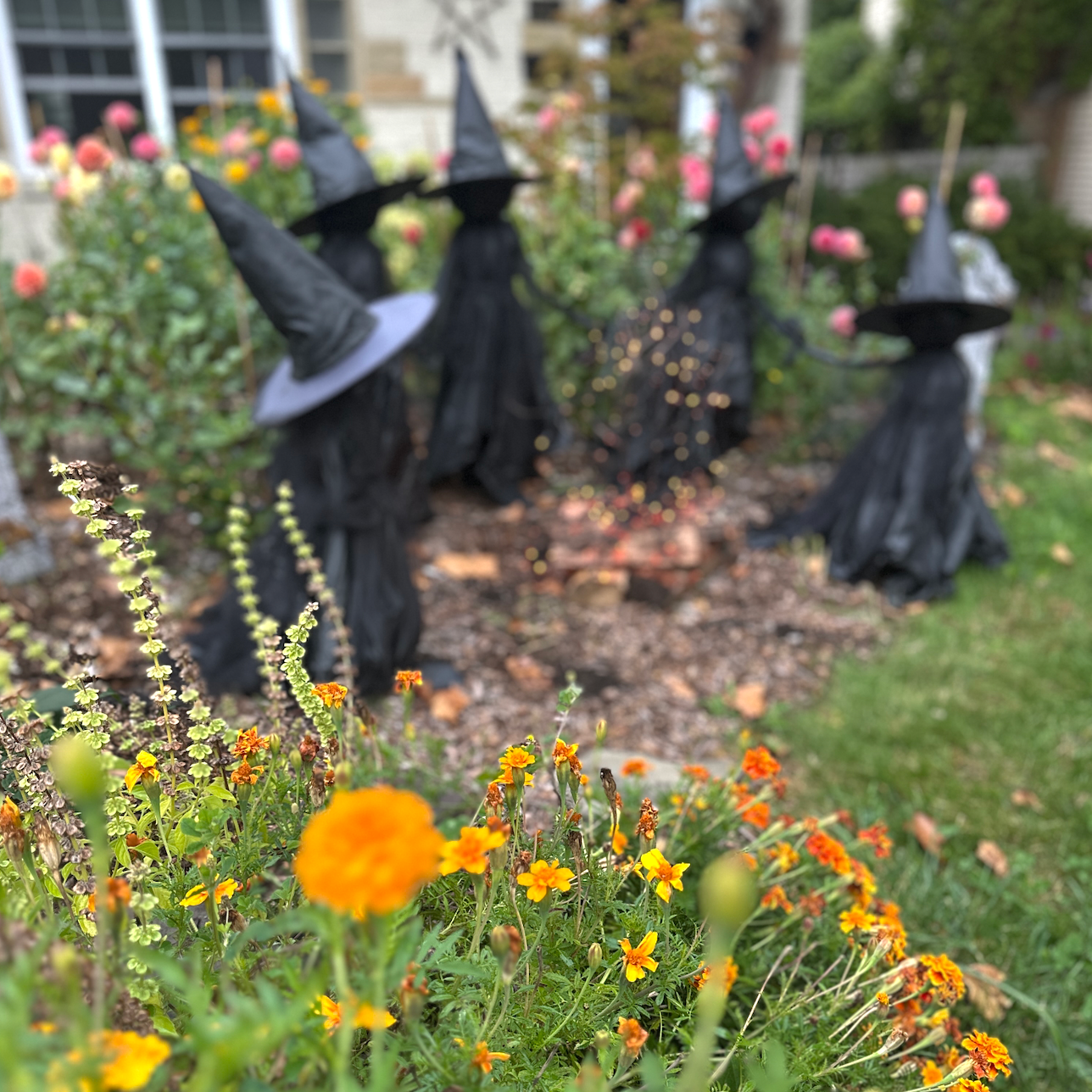
My infamous yard witches… at least so in my neighborhood.
What to Leave
The instinct every fall is to tidy. Cut back, clear out, make the garden look "finished" before the first frost has a chance to embarrass you in front of the neighbors. But some of the most witchy things you can do in a fall garden are, quite simply, nothing at all.
Take the dried stalks. I used to cut everything down to the ground the second it started browning, thinking I was doing the responsible thing. Now I leave many of them standing… the seed heads, the hollow stems, the ones that look a little skeletal against the fading light. Not only do they hold a kind of visual magic all their own (there's something genuinely beautiful about a garden that's allowed to go quiet instead of being erased), they're also doing real work. Those stalks become winter housing for overwintering insects and shelter for birds looking for both food and refuge. Protection, in other words, isn't always something you add to a space… sometimes it's something you simply stop taking away.
The same goes for the leaves. I know, I know… every fall the pressure to rake everything into oblivion is real, especially when your neighbors are out there with their leaf blowers by 8am on a Saturday… and/or your husband who wants to be (but he’s coming around). But a layer of leaves left where they fall is quietly doing more good than a pristine lawn ever could as they’re feeding the soil as they break down and sheltering the small creatures who'll spend winter tucked beneath them. Nothing is wasted here… not the leaves, not the season, not even the mess.
But leaving things be is only part of the work… because another part is knowing what to collect while you're out there. Autumn is harvest season after all.
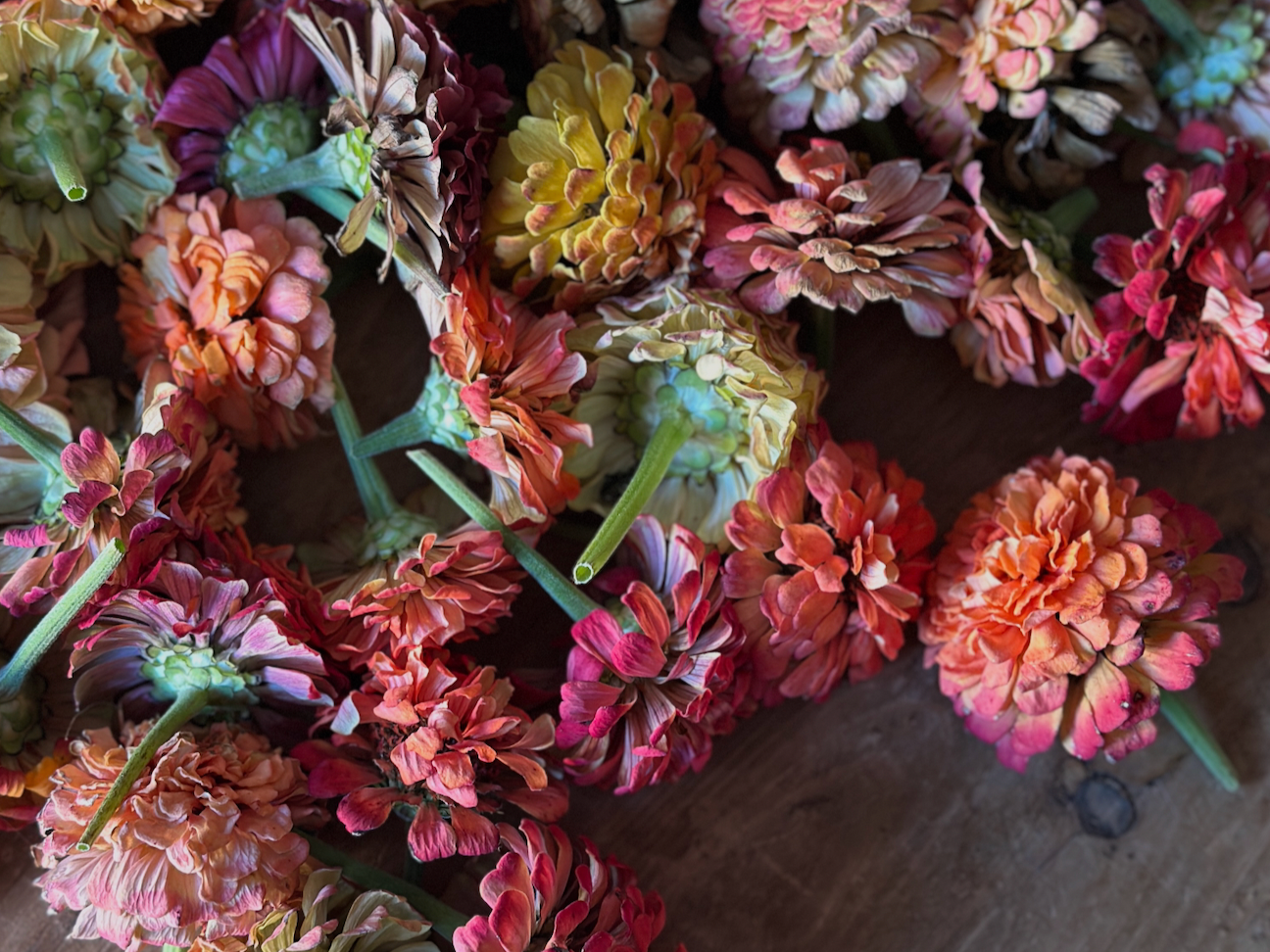
My zinnia harvest last season to dry seeds - all which were then planted in the garden and on the farm.
What to Gather
If leaving things is one half of the fall garden's magic, gathering is the other. This is the season for collecting… the fruits of our labor and the literal seeds of what’s to come.
Saving seeds from this year's flowers is one of my favorite quiet rituals of the season. There's just something so deeply symbolic about it if you stop to think about it. You're not just prepping for next year's garden… you're intentionally choosing what to carry forward. You notice what served you (and what didn’t)... what you want to grow again (and what you don’t). It's hard not to think about your own year the same way while you're doing it… what's worth keeping, what you're ready to let go to seed and revisit later. And from a practical side, the seeds I have (almost without fail) have better germination the next year because they’re seeds that grew in my unique microclimate. They’re seeds that are used to my space, my soil, my temperature swings… and they end up being some of the most beautiful blooms in the garden.
But gathering isn't the same as holding onto everything. Some parts of the garden need a different kind of attention entirely.
What to Release
Not everything in the fall garden is about leaving things be — some of it is about knowing exactly what needs to go.
Clearing away diseased or dying plants isn't just garden hygiene, even though that's usually how we frame it. To me, it's protective work. Boundary-setting, if we want to get a little witchy about it. A garden — like a life — doesn't thrive by holding onto everything indiscriminately. Some things get to stay through winter because they're offering shelter and beauty even in decline. Other things need to go because they're not serving the space anymore, and pretending otherwise doesn't protect anyone. Learning to tell the difference is, frankly, one of the more useful lessons the garden has ever taught me — in the dirt and well beyond it.
Once the leaving, gathering, and releasing is done, there's still room for something smaller — the parts of fall garden tending that aren't really tasks at all.
Small Rituals in the Space
Some of the most magickal parts of tending a fall garden are the smallest ones (because not everything needs to be a project).
A personal favorite: placing pumpkins and gourds throughout the garden, tucked amongst the fading blooms. Part decoration, part offering, just a little something left out for the creatures and critters over the first cold days, and a quiet way of marking the season's turn. In truth, they sometimes stay out all winter, but in the spring they end up being an early food source after the long season of cold, and that feels like it bookmarks the seasons in a really lovely way.
Alongside the pumpkins I have a little cauldron that I put out among the flowers where I'll burn a bit of dried herb or incense some evenings to bring some presence into the space. It's nothing elaborate… but it also doesn't need to be. It's a few minutes outside, a small fire, a moment of noticing the season instead of rushing through it. That's really the whole point, isn’t it? That while a grand ritual you perform once can be lovely, a small one you can return to again and again, all season long can be just as (if not more) impactful.
The Lesson of It All
The garden is always giving us clues, through every season, of the lessons we stand to learn. It mirrors back to us what we need to know… what to leave, what to gather, what to release… and if we’re paying attention we can learn to trust those same instincts in ourselves during the season.
But of course, if you’re feeling called to add literal witches or magickal creatures to your space as an extra boost of seasonal fun, I’m here to encourage you to do that, too.
