
Practical Magic in the Garden: Protection
Practical and magical ways for protection in your garden.
As I’ve mentioned before, I’m a firm believer in magic. Everything is energy - and everything is connected - and therefore when we put a little intention towards working with the energy of things, I not only believe in the outcomes but I’ve experienced them firsthand.
Yet, we also live in a very tangible, practical, physical world. The responsibilities and expectations we all manage are very real and not something we can just dismiss. I’ve a firm believer that we can’t just will our way into our dream realities… action and effort are required to make things happen, too.
This Practical Magic in the Garden series is all about combining both in order to create the gardens and growing spaces we dream of.
In the first post of the series we talked about the practical magic of abundance. Now, we’re talking about the practical magic of protection (from pests, disease, etc.). While we’d all like to think that with a little positive intention things would grow well, we have to be real about the fact that it’s not always the case. Pest pressure, disease pressure, negative energies, it’s all real.
As a farmer who sells bouquets, I’ve dealt with my fair share of theft, not being paid fully, and even some minor destruction of property. I wish it wasn’t the case, but instead of staying stuck on it I ramp up my protection game. And today I’m sharing some of my favorite ways to do so.
The Practical Side of Things
From the practical side of things, there are some simple things one can do when wanting to welcome more wildlife into the growing space. These are all things I’ve incorporated into my own garden and farm, and I can’t tell you how “alive” the spaces feel on a regular basis.
Soil health: The health of a garden determines a lot about whether pests and disease find their homes in it. A healthy garden (and healthy plants) are less prone to pests and such, and the foundation of a healthy garden is to have healthy soil. There are a number of ways to do this (and it deserves a whole post on its own) but focusing on building up soil health can be an incredible defense against pests.
Beneficial insects: The food chain works for a reason, and most pests in the garden have natural predators. So creating an ecosystem where those predators are welcome and can thrive is helpful. Ideally they come in naturally, but there are also suppliers you can order beneficial insects from (such as beneficial nematodes, green lacewings, lady bugs and so on).
Integrated Pest Management: I joke that people will often find me in my pajamas walking along the plants in the morning, but one of the benefits of doing so if literally watching the plants. And when I’m out there looking at them each day, I can see if there’s something causing harm or if something might soon. For example, when I come across eggs on a leaf I always look to see what they are and then, depending on whether they’re helpful or not, either leave them or remove them. Getting ahead of pests is one of the best ways to make sure you don’t have a problem with them.
Biodiversity (we’ll talk about more below): A thriving garden is full of life. Bees, butterflies, spiders, birds, toads, frogs, snakes… I know some of those might not seem like ideal garden friends (hello, snake) but they all play a part in the web and all of them feed on insects and pests. Having a garden where these creatures can live means they’ll be doing the work to keep pests in check.
Herbs: There’s a reason that companion planting works so well. Many insects are deterred by the scent of some herbs and flowers, which means they can be a useful and natural repellent when planted nearby. Some favorites of mine when it comes to deterring insects are basil, mint, rosemary, thyme, lemongrass, oregano, sage and marigold, too.
Having a Fence/barrier: This probably seems a bit obvious, but having a barrier or fence in your space sends a message or a boundary. Whether it’s a retaining wall, side of raised bed, or proper fence, it gives the garden a sense of containment… like the garden is being safely held.
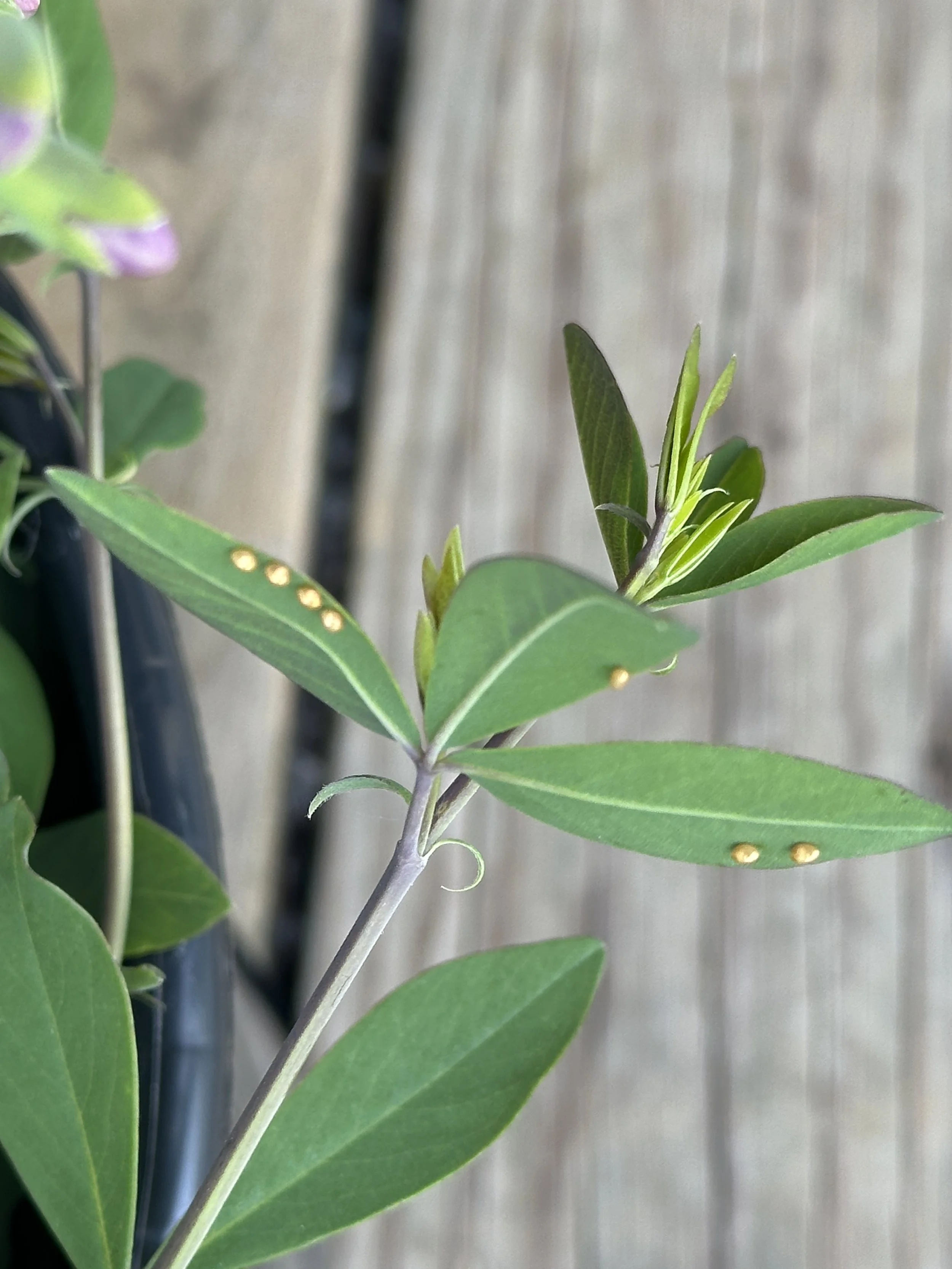
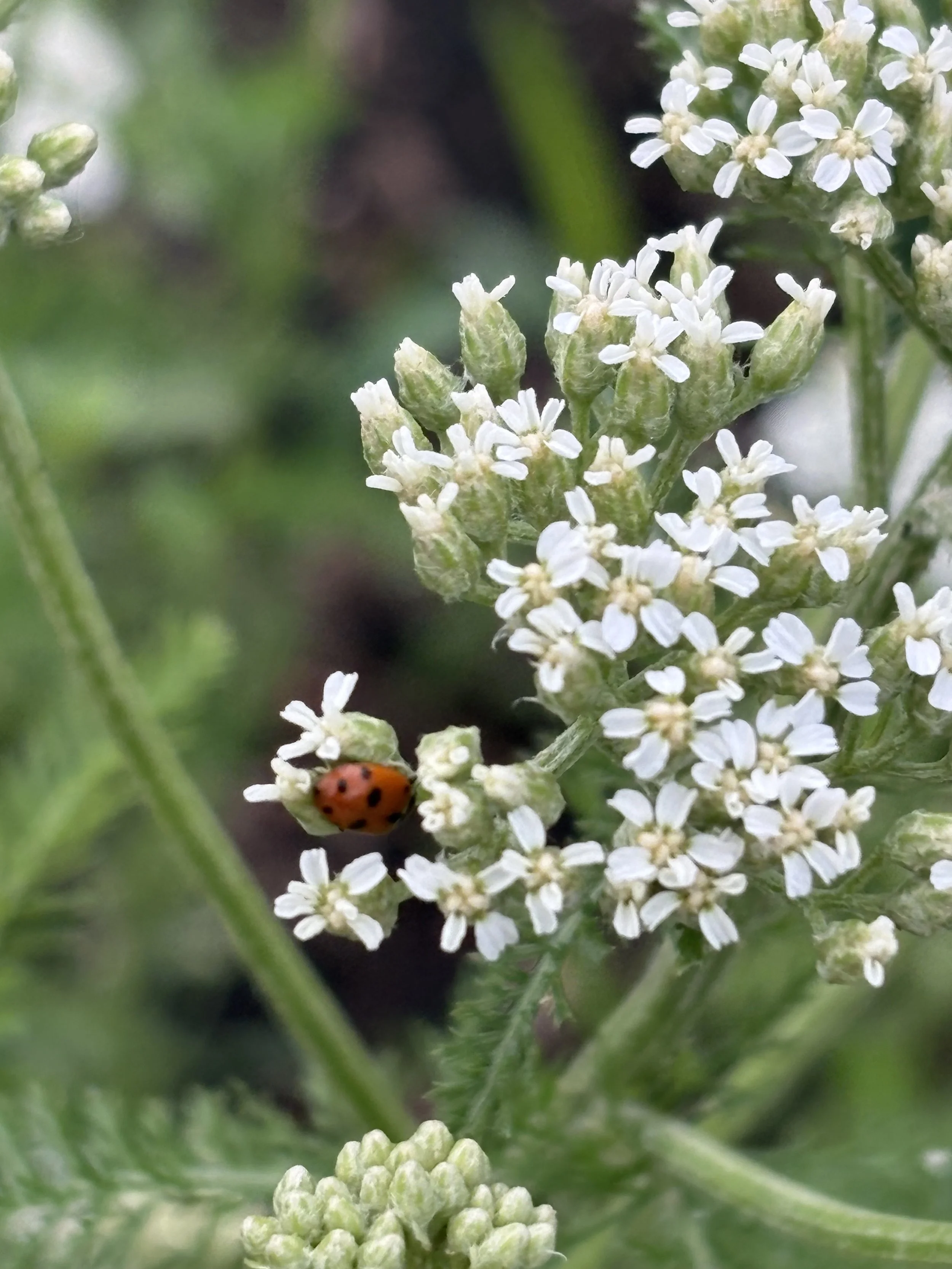
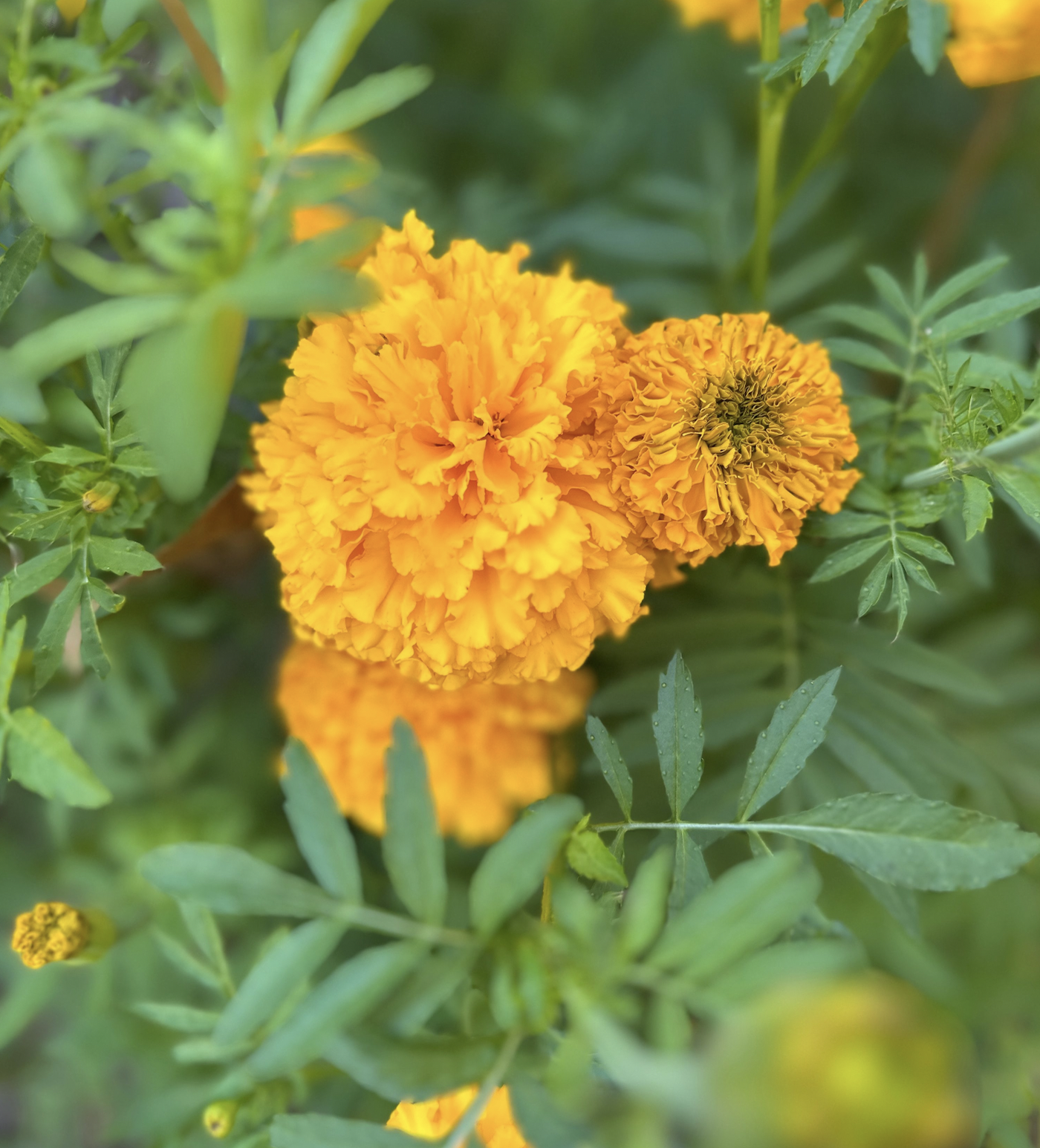
Pictured (left to right): Pest eggs on the underside of leaves (a part of monitoring and IPM), a ladybug - one of the favorite beneficial insects, marigolds - a common deterrant for pests and critters.
The Magical Side of Things
Now, let’s talk a bit about the more magical side of welcoming wildlife and biodiversity into the garden.
Herbs: For centuries, in various cultures and across various lands, the world has used the powers of herbs as tools for protection. Many might be familiar with the practice of smoke cleansing where herbs are burned in order to clear and ward off negative energies. This is one way that can be used in the garden, but also simply bringing the herbs into the garden carries the same intention. I plant basil and rosemary every year (as they’re not perennial where I live), while lavender and sage have permanent places in the garden. I also harvest the herbs and bury them in certain areas of the garden where I feel there needs to be extra protection.
Crystals: The stones and rocks that form in the most intense parts of the earth… and under the most extreme conditions… they’re something special. There is a crystal or stone for every purpose, and stones for protection are many. My favorites are black tourmaline, amethyst and tiger’s eye. But I also use rocks and stones from my property, or those I’ve found along the beach. When you think of any large stone - like a boulder, a mountain, the rocky cliffs of Ireland or a place such as Stonehenge in England - there is a dominating feeling of strength and stature. I like to think that, even in the smallest pebble, that strong, not-easily-shaken energy is present.
Faery (fairy) house: There’s fairies, and then there’s faeries (also known as The Fae). One might be more associated with childhood stories and movies while the other based in folklore and mischief. But both are connected to some sort of magic. For this purpose, I’m speaking about The Fae and the folklore that comes from old European and Celtic traditions. As protectors of the wild and natural magic, the Fae don’t operate along the same guidelines humans do, and therefore they’re often seen as mischievous magic makers that are not to be messed with. I remember visiting Ireland and coming across a Hawthorn tree that was adorned with ribbons and trinkets for the fae folk. These trees are often thought of as portals into the otherworld (the place the fae live) and so they’re treated with respect in hopes that the fae will recognize the good intentions of the humans who have left their offering. In my own practice, I don’t try to work with the fae, but I do try to do things to show my respect to them. For example, having a small house sitting under the yew tree (another symbolic tree in Irish folklore) and leaving small trinkets for them. As I do, I offer my respect to them and the role they play in protecting the natural world, while also setting a clear boundary with them.
Salt borders: Used as a simple boundary to keep negative energies and unwanted visitors at bay, salt borders have become a simple part of my protection routine.
Plants: When I moved into my house I cleared quite a bit of the “landscaping” that the previous owner had, including some things such as barberry and a wild raspberry (as it was growing through the deck). Now, years after being in the house, those same plants still grow back every year. But instead of thinking of them as any sort of nuisance, I think of them wanting to show up with their thorns as a symbol of protection. I do pull the barberry (given it’s invasive) but not first without recognizing the fact that its thorns serve a purpose and thanking it for its proactive energy. But then I started to think of other plants that I would want in the garden that also carried this sort of protective energy, and so I planted rose bushes (both for their beauty and for their thorns), foxgloves due to their protective symbolism as well as verbena, lavender, and yarrow… all of which carry some sort of symbolic relation to protection and peace.
Intentions/spells: I’ve always subscribed to the notion that our words and our thoughts matter when it comes to how our lives play out. And so as I’m wandering through the garden, whether it’s acting on one of the above magical aspects or one of the more practical things, I’m speaking to the garden. I’m sharing thoughts, making up little poems as I go, casting spells if you like. My goal in doing so is simply to make my intentions known… and I think speaking things out loud, even in a whisper, does something to help bring it into being.
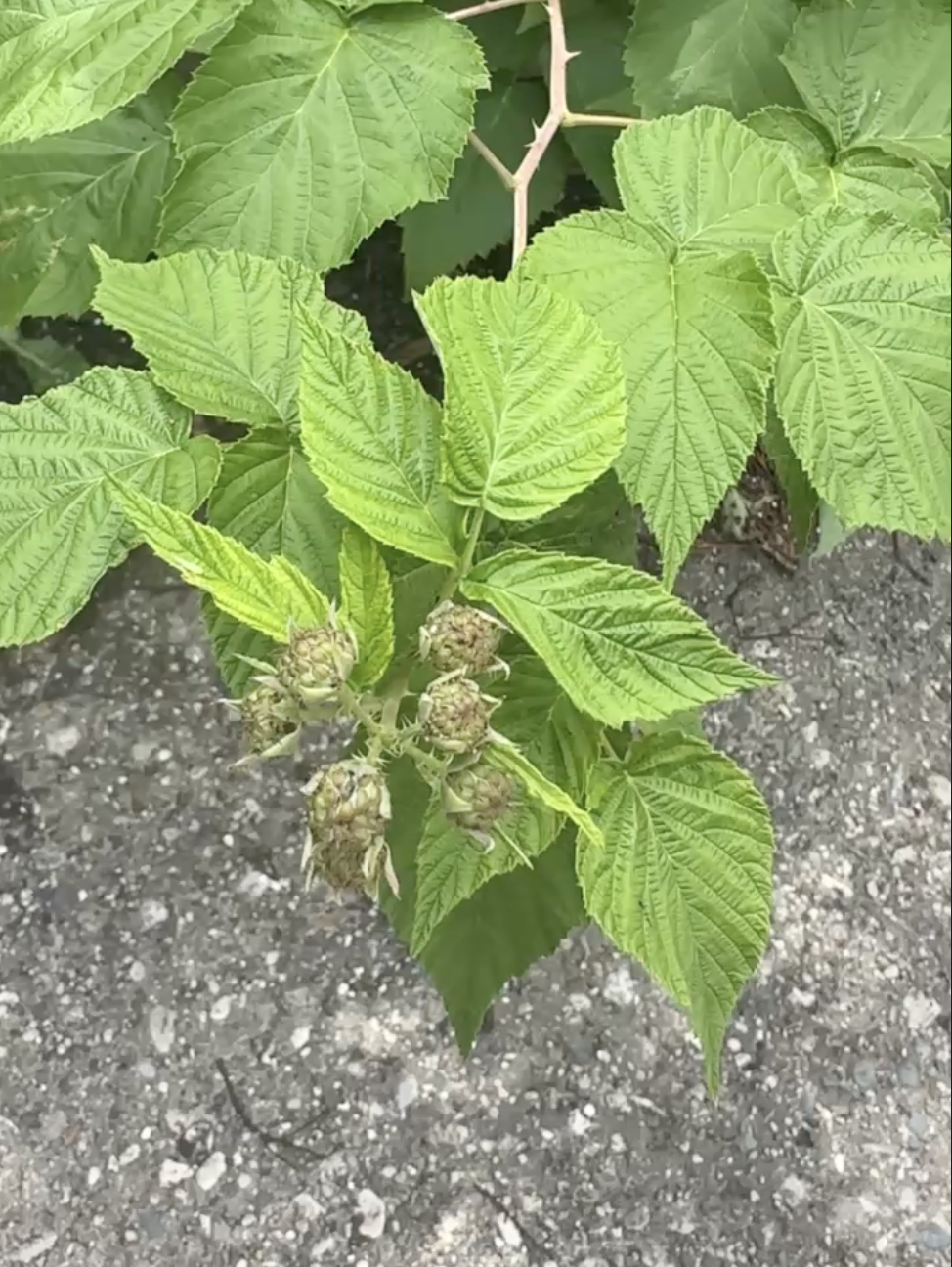
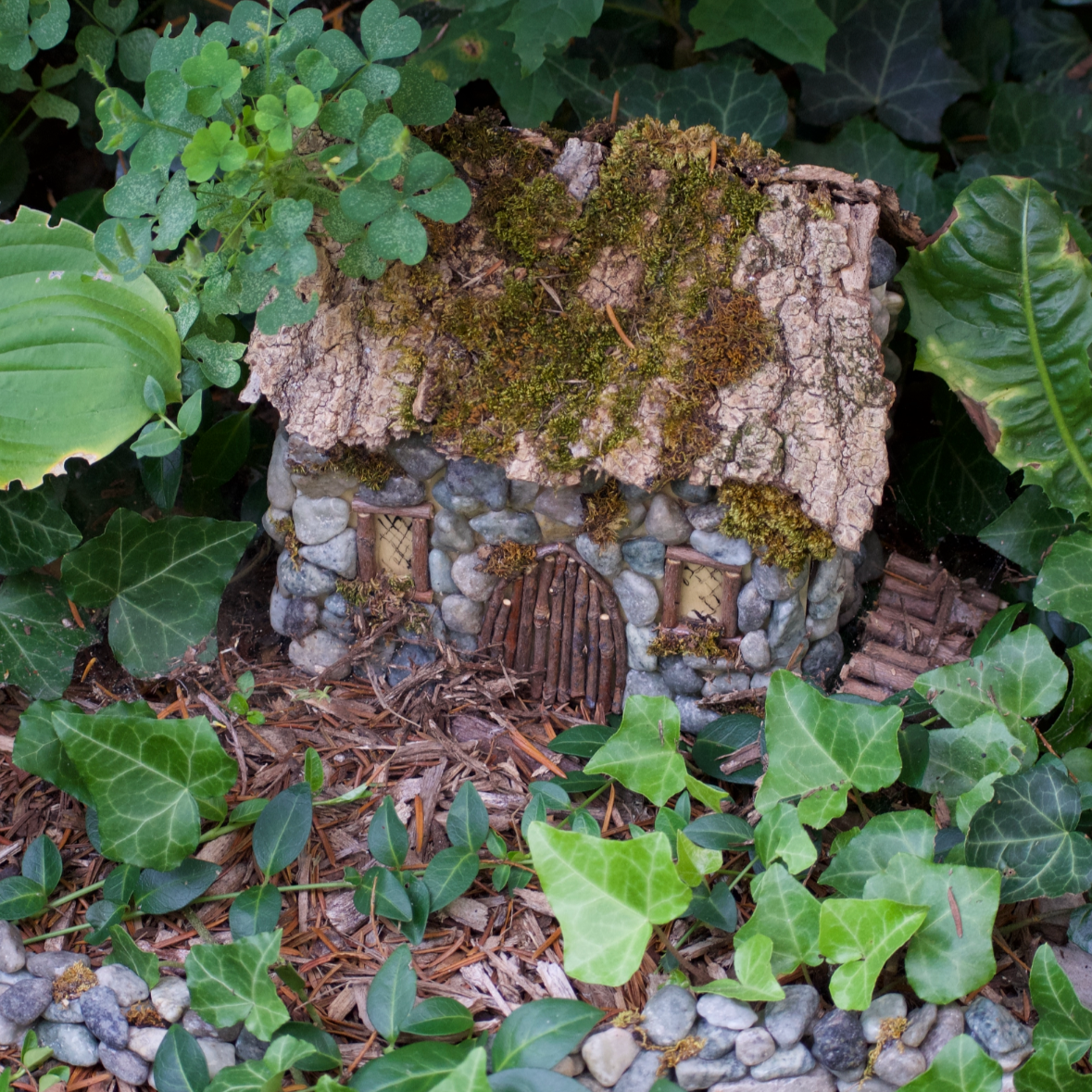
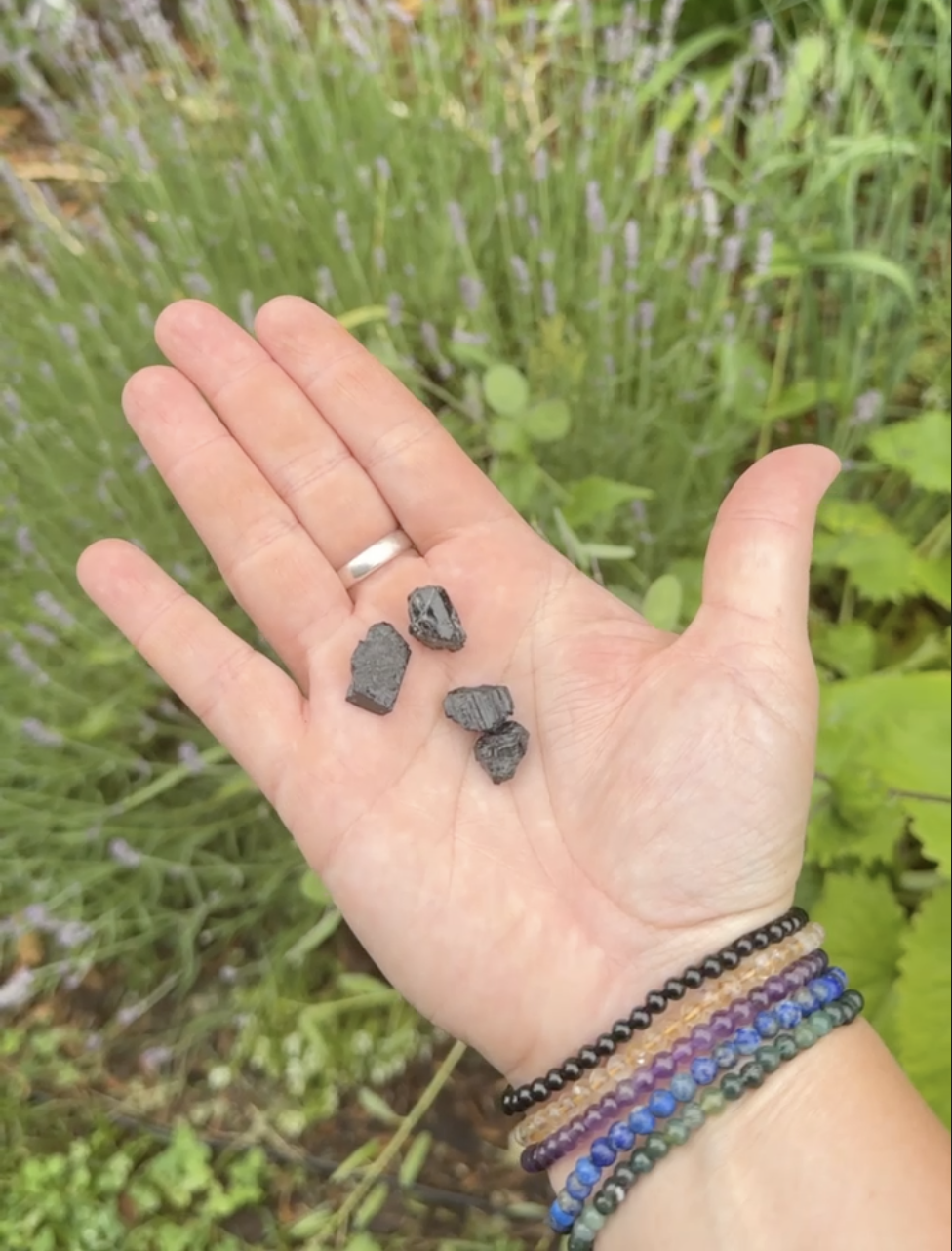
Pictured (left to right): Wild raspberry that grows out from my deck, the faery house I built out of respect, black tourmaline crystals I bury around my property.
If you’ve found your way here there’s a good chance you believe in a bit of magic. And even though some of this might still seem a bit out of the norm, I always think “what’s the harm?”. As someone who values and believes in science and data… yet also knows that we as humans aren’t capable of fully understanding the way that everything works…. I like to think having a bit of magical faith does more good than harm.
We live in a world that so often loses the wonder and the connection we have to the natural world. We lose our intuitive knowledge and the magic that lives within us once we realize that responsibility and “real life” are our priorities. But I say, why does it have to be one or the other? It’s the combination of both the magical intention AND the practical action where it all really comes together and ends up creating the outcome we’re looking for. And let’s be real… one is far more fun than the other.
These are by no means exhaustive lists, but it gives you an idea for a place to start for the next time you’re looking to bring a little practical magic into your garden, too!
This is part of a series. You can read the rest of the series here: the practical magic of abundance and the practical magic of wildlife.
Ready to Grow with Intention?
If this post resonated and you want to take your garden a step further this season, Rooted in Magic is for you. This is a practical guide to growing flowers with elemental intention - including plant guides and suggestions, information to help you plant with the moon, and simple layouts to get you started.
Turn your garden into something even more magical this season.
