
The Witchy Origins of Halloween
The history behind the traditions, tricks, and treats we’ve come to know.
I’ve always loved Halloween. I’m a sucker for any excuse to dress up in costume (and most times I go completely overboard)... I’ve been a fortune teller, a unicorn, Gaia, my own version of Rainbow Bright, the Devil… and of course, the costume I come back to year after year now… a witch.
I embraced the “tricks” of the season in my younger days as a teen participating in toilet paper wars against fellow teens, which sometimes involved eggs, maple syrup, bird seed and car chases in the dark of night that, looking back, makes me hang my head in disappointment at our incredibly unsafe choices.
Going to a pumpkin patch to find the perfect (or maybe 3) pumpkins for carving is still an activity that’s a “must do” on my list each year… even if I’m doing it by myself. Growing up there was a patch not far from home with pumpkins strewn along the lawn and some of the best fresh apple cider and pumpkin donuts you’ve ever tasted. It was sold years ago and turned into a winery which broke my heart as to this day I haven’t found anything that competes with it.
These parts of the holiday and celebration that were always just a “given”, but never really knowing why.
As my own spiritual journey has progressed and as I’ve come to understand more of my own lineage (my Celtic roots stemming from Ireland and the United Kingdom), I’m continually in awe of how so many ancient traditions and celebrations were taken and adapted to fit the directive during the spread of Christianity. How stories and symbols were used to convert and control the cultures where these traditions were born… and then to cast those same cultures aside and/or worse, harm them, all for the sake of power and greed.
It's why I think knowing the real history of the season matters. Not to ruin the fun of it - trust me, I'll be dressing up in my witch costume handing out candy the same as always - but because there's something worth reclaiming in knowing where it actually came from. So that's what we're getting into today.
From Samhain to Halloween
First things first… Halloween didn't start as Halloween. It started in Ireland as Samhain, the Celtic festival marking the end of harvest and the thinning of the veil between this world and the next (a topic I've written about in more depth here, so I won't repeat myself too much in this post). What matters for this post is what happened next: as Christianity spread through Celtic lands, the Church didn't erase Samhain so much as it rebranded it. All Hallows' Eve was placed on the calendar right on top of it, absorbing the same dates, some of the same symbols, and quietly steering the meaning toward something the Church could control. Even All Souls Day on November 2nd shares the part about remembering those departed. The bones of the older festival never really left – especially in places like Ireland, which still hosts some of the most impressive Samhain celebrations – they just got a new name.
So where does the 'witchy' part come in?
The ancient Celts weren't witches in the way we picture them today… no pointy black hats or broomsticks for them. But the folk practices that survived around Samhain were kept alive by the healers, herbalists and wise women (and men) in those communities. And later, they were often the very people the Church would call witches. Centuries later, when modern Pagans and witches pieced together the Wheel of the Year, Samhain took its place as one of the eight sabbats, and many still consider it the witch's new year. So when witches celebrate Samhain today, they're picking back up a thread that has been connected to that history and tradition all along.
Most of what we do on Halloween today has a piece of that older story tucked inside it. So let's look at a few of the most familiar ones and where they actually came from.
The Jack-O-Lantern
Before pumpkins, there were turnips. Pumpkins weren’t a native crop in Ireland and it wasn’t as though goods were imported way back when. Instead, people used turnips and carved the tiny root vegetables with crude, frightening faces as means of warding off wandering spirits. They’d set them outside just as we do with pumpkins as a form of protection.
The tradition traces back to the folklore of "Stingy Jack," a man said to have tricked the devil and, upon dying, had been turned away from both heaven and hell. He was doomed to wander around with only a burning coal inside a hollowed turnip to light his way.
Irish immigrants brought the custom to America, where they discovered that pumpkins (native to North America) carved a whole lot easier than turnips ever did (and I can attest to this after carving a turnip of my own).
What's easy to forget now, surrounded by grinning porch decor every October, is that carving a face into a vegetable was never about cute. It was intentional… protective…. a ward towards the unknown evils wandering around… not simply a decoration.
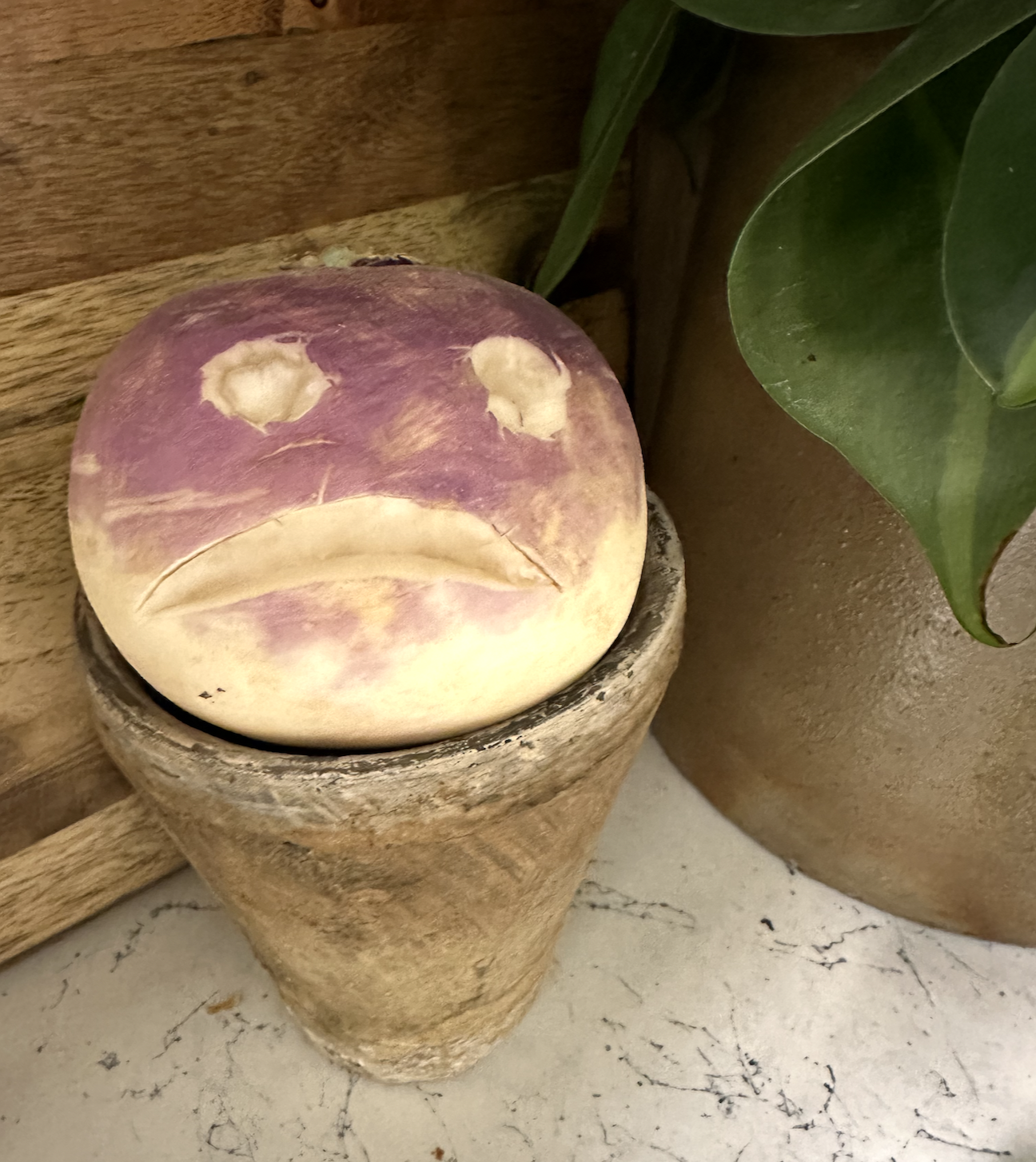
My sad approach to carving a turnip one year. The skin and flesh is not nearly as easy to puncture as that of a pumpkin… and the smaller size is less forgiving with a knife… so the design was minimal.
Costumes & Disguise
Dressing up on Halloween didn't start as fun, either… it started as self-preservation of sorts. If spirits were said to walk among the living on this one night of the year, the safest move was to look like one of them. Disguise meant blending in with whatever was already wandering, rather than standing out as an easy target.
Somewhere between then and now, the costume shifted from protective camouflage into personal expression. We're still disguising ourselves… it’s just that we’ve stopped being afraid of what's “out there” and started having fun with who we get to become instead.
Trick-or-Treating's Older Roots
Candy is a relatively recent addition to a much older exchange. Long before "trick-or-treating," there was souling. This was the practice of going door to door offering prayers for the dead in exchange for small cakes, known as soul cakes. Later, "guising" saw children (and sometimes adults) performing a song, a poem, or a trick in exchange for food, rather than simply asking for it outright. The transaction at the center of trick-or-treating (something given in exchange for something else) is centuries older than the holiday's current form. Only the currency changed.
Black Cats, Witches on Broomsticks & Other Symbols
Some of Halloween's most iconic images carry a darker history than their cartoon versions let on. Black cats, now printed on every dish towel in the seasonal aisle, were once considered omens tied directly to witch trial-era superstition… an association that led to real women being tortured and killed. Witches on broomsticks trace back to folklore, satire, and, depending which historian you ask, possibly even older traditions involving flying ointments. We think of these now as spooky decorations but they’re leftover fragments of a time when the accusation of witchcraft could cost a woman her life. And not to be too somber, but I do think that recognition is worth taking a moment to think about before we put it on a welcome mat, especially nowadays where the war against women is still taking place.
Yet, there is a very real reclamation going on, especially in regards to the feminine draw to witchcraft. And so to my fellow witchy women, if claiming that for yourself also means decorating to fit the aesthetic and honoring that visual, by all means absolutely do so!
Honoring the Roots
I was combing through a box of items saved from my childhood and I came across a story I had written in early elementary school. It was about a young girl who dressed up as a witch for Halloween, only to then meet a real witch who lived in an old home at the end of the street (such an original plot, I know). Reading it now, I couldn't help but laugh a little. Not only was the last line “maybe there’s a little witch in all of us” (feels appropriate for myself these days), but I clearly loved this holiday before I understood the first thing about where any of it came from.
Perhaps that's true for many of us.
We inherit the costumes and the candy and the pumpkins without ever being handed the history alongside them. And there's nothing wrong with the fun of it… but maybe this year, carving the pumpkin or picking the costume is also a small chance to remember that none of it started as decoration. It started as a way people actually lived… marking death and harvest, warding off what they feared, asking for something in exchange for a blessing. It belonged to real places and real people before it belonged to a parade or party.
So the next time you carve a face into a pumpkin, or throw on a costume, or hand a kid some candy at your door, pause for the slightest moment to remember whose night this belonged to first.
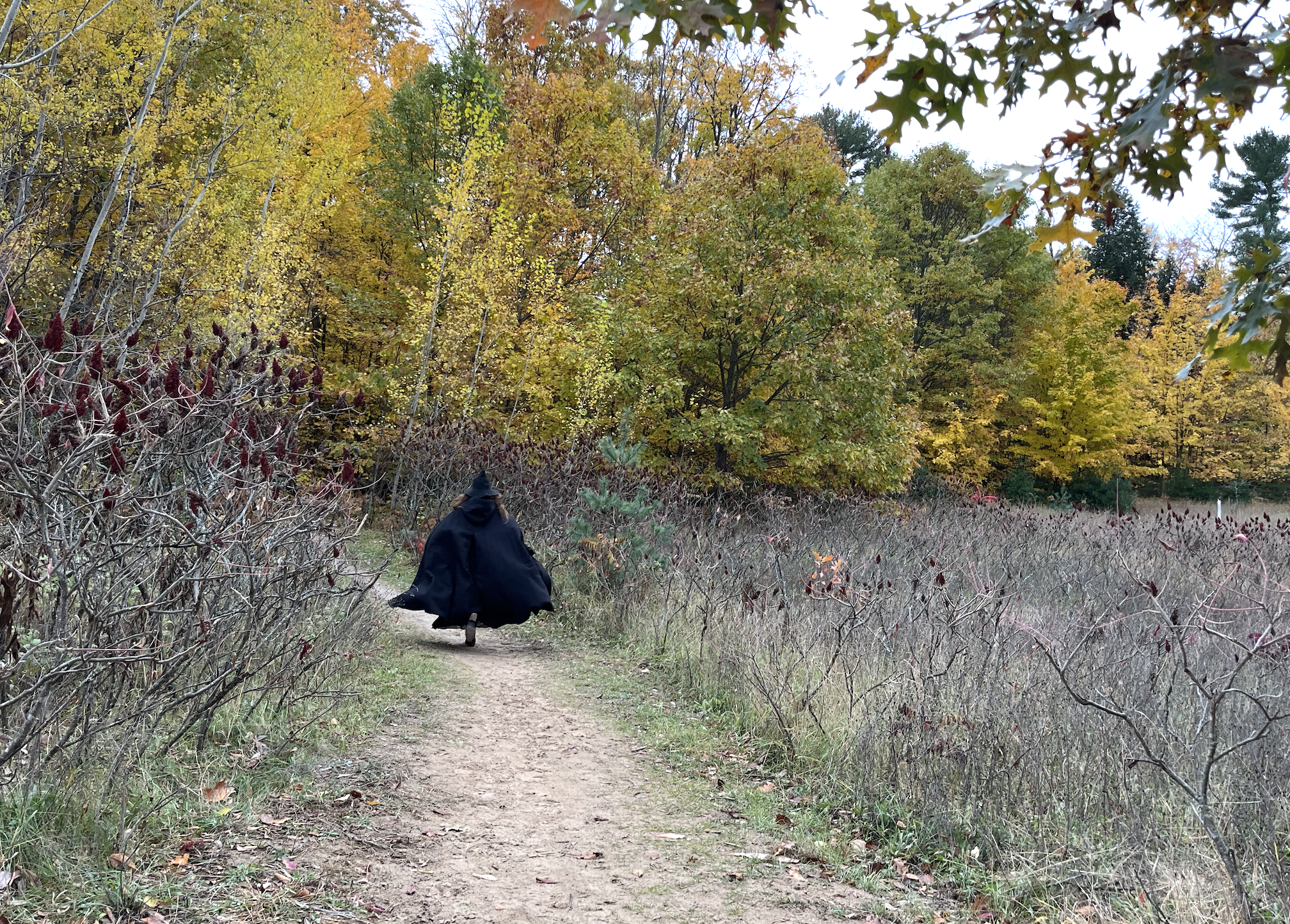
My favorite costume as of recent years… but only as a recognition of what’s been inside all along.