
What are the Sabbats?
Celebrating the seasons within seasons
We tend to talk about the seasons as if they’re neat and contained. Spring. Summer. Autumn/Fall. Winter… but our lived experience tells a different story.
We know that early spring doesn’t feel the same as late spring. We know that the first cold of winter in December doesn’t carry the same weight as the depths of winter in February. We know the early autumn still often feels like summer, before the leaves change color leading to late autumn which feels almost poignant.
There’s always a quiet, subtle moment when one season begins to loosen its grip… when something else starts to stir.
That’s where the seasonal celebrations of the sabbats come in. Markers of the seasons… and the spaces within the seasons… that add layers and context to what we’re noticing and feeling.
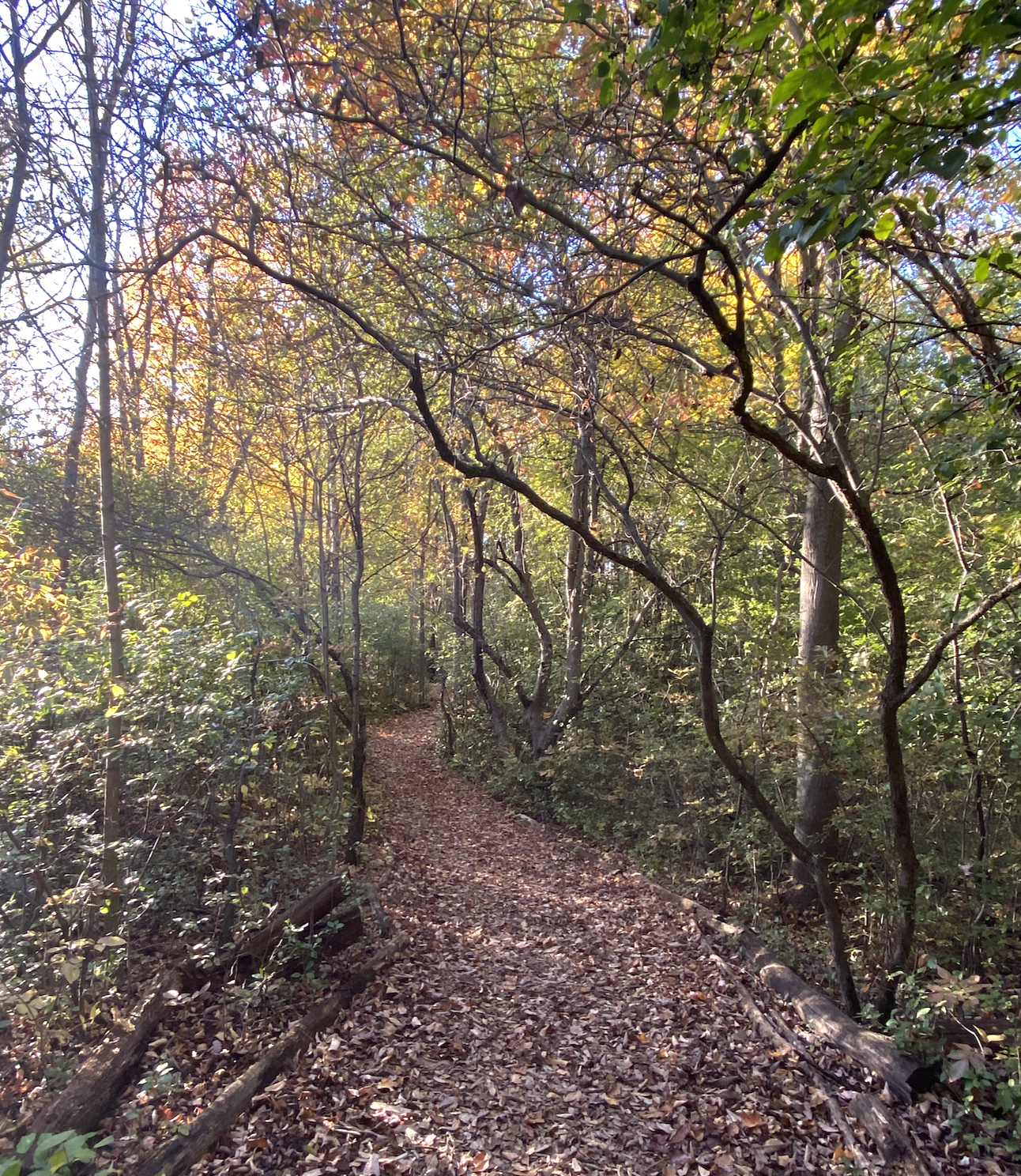
a simple wooded walking path as the seasons shift. ©Arlyn & Co.
Seasons within seasons
You’ve most likely heard of the solistices and equinoxes, as they’re the most mainstream celebrations and acknowledgements of the seasonal shifts, because they mark the beginning of the four main seasons. But there are also cross-quarter days, midpoints between each of the main seasons that start the transitions, whether we see them or not, towards what’s coming next. The solstices, equinoxes, and cross-quarter days divide the year into roughly eight, six-week phases, with each one marking a shift in light, energy, symbolism and of course, what we see around us in our own lives.
These additional days help us orient ourselves inside of the seasons, because instead of four broad parts, we get eight distinct chapters… each with its own tone, pace, and invitation.
New to seasonal living? My free guide The Rhythms That Support Us is a gentle introduction to the seasons - worth grabbing before you go further.
The solstices and equinoxes: the turning points of light
These are the anchors of the season and the moments when light itself reaches an extreme or a point of balance. These are considered the traditional solar festivals, as they come about due to the sun’s journey through the sky, marking the major seasonal shifts.
Winter Solstice (around December 21) - also known as Yule
The darkest day of the year when the sun is lowest in the sky.
This marks the official beginning of winter - and Capricorn season.
Winter is about deep rest, conservation, and quiet recalibration… even as the light slowly begins to return.
Spring Equinox (around March 20) - also known as Ostara
Day and night, light and dark, meet in perfect balance.
This is the start of spring - and the astrological year, starting with Aries season.
Spring carries themes of renewal, emergence, new growth, and possibilities.
Summer Solstice (around June 20) - also known as Litha
The longest day of the year when the sun is highest in the sky.
The is the start of Summer - and Cancer season.
The season opens with fullness, vitality, and outward energy.
Autumn Equinox (around September 22) - also known as Mabon
Another moment of balance when day and night are even.
This marks the beginning of Autumn - and Libra season.
Autumn begins with harvesting, recalibration, and a gradual turning inward.
Each solstice and equinox ushers in a new season and coincides with the beginning of the cardinal zodiac signs - the signs that initiate, instigate and lead. These days set the tone for the six weeks that follow.
*A note about the names. Ostara, Litha and Mabon were names given to the solstices/equinoxes in more modern years during a refinement of the Wheel of the Year by a man named Aiden Kelly. He aimed for each Sabbat to have a more traditional/Celtic name associated with it. Some people use them, others do not, but I wanted to include them for the purpose of this overview.
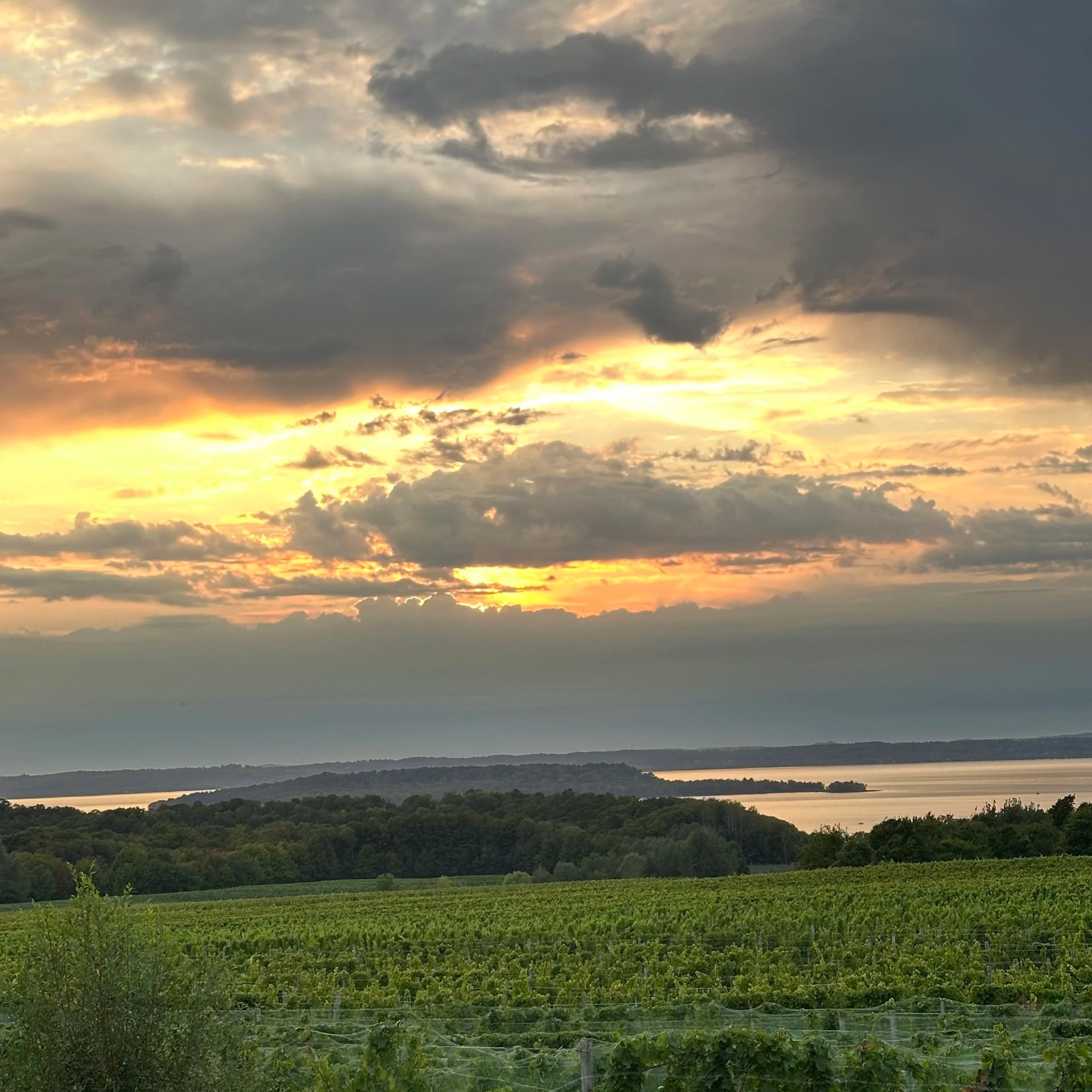
a view from one of my most favorite vantage points in northern michigan. ©Arlyn & Co.
The cross-quarter days: the lived shifts
While perhaps lesser known, the cross-quarter celebrations fall midway between the solstices and equinoxes. These were the more traditionally celebrated fire festivals in Celtic/Germanic pagan traditions. These are often when the season’s character becomes undeniable…. the days where we’re validated in our sensing that the season is shifting.
Imbolc (around February 1–2)
Marking the midway point of winter.
Traditionally associated with the first subtle shifts and signs of spring beneath the surface.
The days are still cold, but something begins to stir… ideas, energy, anticipation.
Beltane (around May 1)
The midway point of spring.
Growth is accelerating and life is moving. This is the fertile, expressive heart of the season.
Lughnasadh / Lammas (around August 1)
The halfway point of summer.
Associated with the first harvest (as spring and early summer crops are coming to fruition). It’s a subtle shift from pure expansive energy toward gathering and discernment.
Samhain (the night of October 31-November 1)
The halfway point of autumn.
This is when the veil thins between worlds and we start a deeper turn inwards… marking the true descent towards winter.
These moments often feel like turning points before we consciously name them. They reflect what the body already knows. While I’ve mentioned the dates where the celebration begins, remember that these are the markets that start the six-week seasons… so these are not just single days, but seasons to be lived through.
A note on tradition, lineage, and respect
These seasonal markers are often organized into what’s known as the Wheel of the Year - a framework most commonly associated with modern Pagan and specifically Wiccan traditions.
Within those traditions, the sabbats are not just dates on a calendar, but sacred observances tied to ritual, myth, and spiritual practice. They’ve been carefully held and passed down as a way of staying in relationship with the land, the cycles of light, and the turning of time.
When I speak about the sabbats here, I do so with deep respect for those lineages and with an understanding that seasonal awareness itself is something humans across cultures have practiced long before it was formalized into any single system. For thousands of years a form of these celebrations have taken place, as fire festivals and solar festivals, with significant celebratory sites such as Newgrange in Ireland and Stonehenge in England having been built approximately 3000BC and earlier. These eight celebrations were structured into the current framework in the 1950s-1970s.
While my own lineage and current practices are rooted in these celebrations (my Celtic/Germanic roots), sharing this information is not in owning them. It’s about acknowledging where the framework comes from, while honoring the universal human experience of living inside of these cycles.
Ritual, celebration, and the choice to participate
While the sabbats are deeply rooted in Pagan and Wiccan traditions, noticing and honoring seasonal shifts doesn’t require a specific spiritual path or any sort of label.
At its simplest, ritual is just a way of marking change with intention.
Celebration can be solitary or communal and ritual can be as simple as a walk, a shared meal, lighting a candle, journaling, or rearranging your space to reflect the shift you’re in. We can all make it to be what is most helpful in our own lives.
You don’t need a prescribed practice and rest assured you don’t need to do it “the right way”… there is no “right way”, in fact. Honoring the turning of the year and the seasons asks only for presence in them… to be noticed, felt, and appreciated. Because when we acknowledge these subtle thresholds, life starts to feel less disjointed.
We stop expecting winter energy in late winter. We stop rushing spring before it’s ready. We allow ourselves to slow down in late autumn. We give ourselves permission to adjust pace, focus, and expectations as the season evolves. And this is where seasonal living becomes less about aesthetics or curation, and more about timing.
An invitation, not a requirement
If these seasonal markets have piqued an interest, it’s important to keep a few things in mind.
You don’t have to celebrate every sabbat/celebration, you don’t have to follow a wheel and you don’t have to ritualize anything at all. This gets to be a path where you’re able to take the parts and pieces that you feel most connected to.
I acknowledge all eight of the them, but there are a few that I ritualize and honor in greater capacity than others. The opportunity is to notice where you are within the season so that you allow yourself to shift with it.
And not because the calendar tells you to… but because the world around you - and perhaps within you - already has.
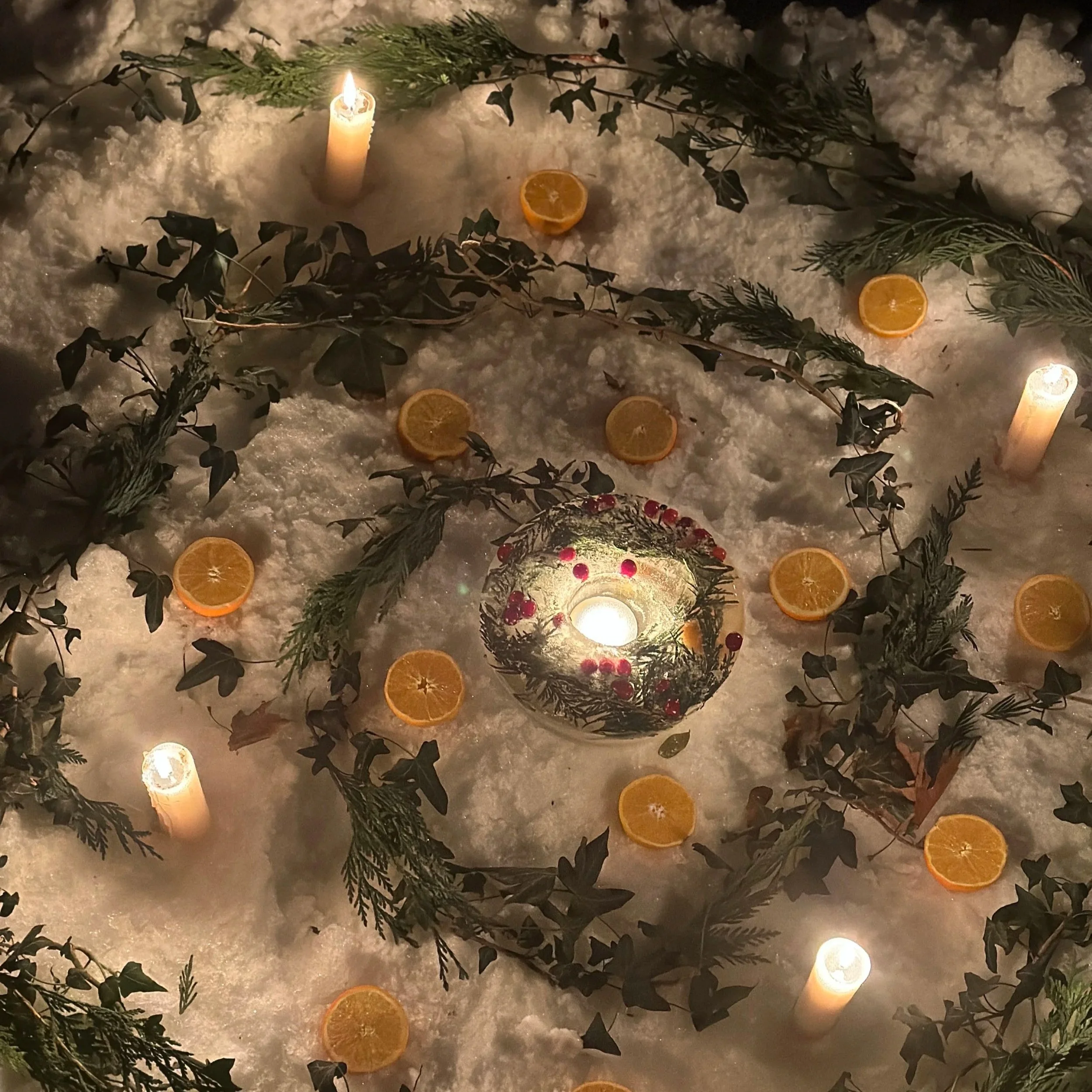
a winter solstice / yule celebratory spiral to honor the return of light ©Arlyn & Co.